Most founders we speak to now analyse their numbers in one of two places: a spreadsheet, or an AI tool they paste an export into. Both are fast but the trouble is that both fail quietly and confidently. Here are the five faults, with a way to catch each one…
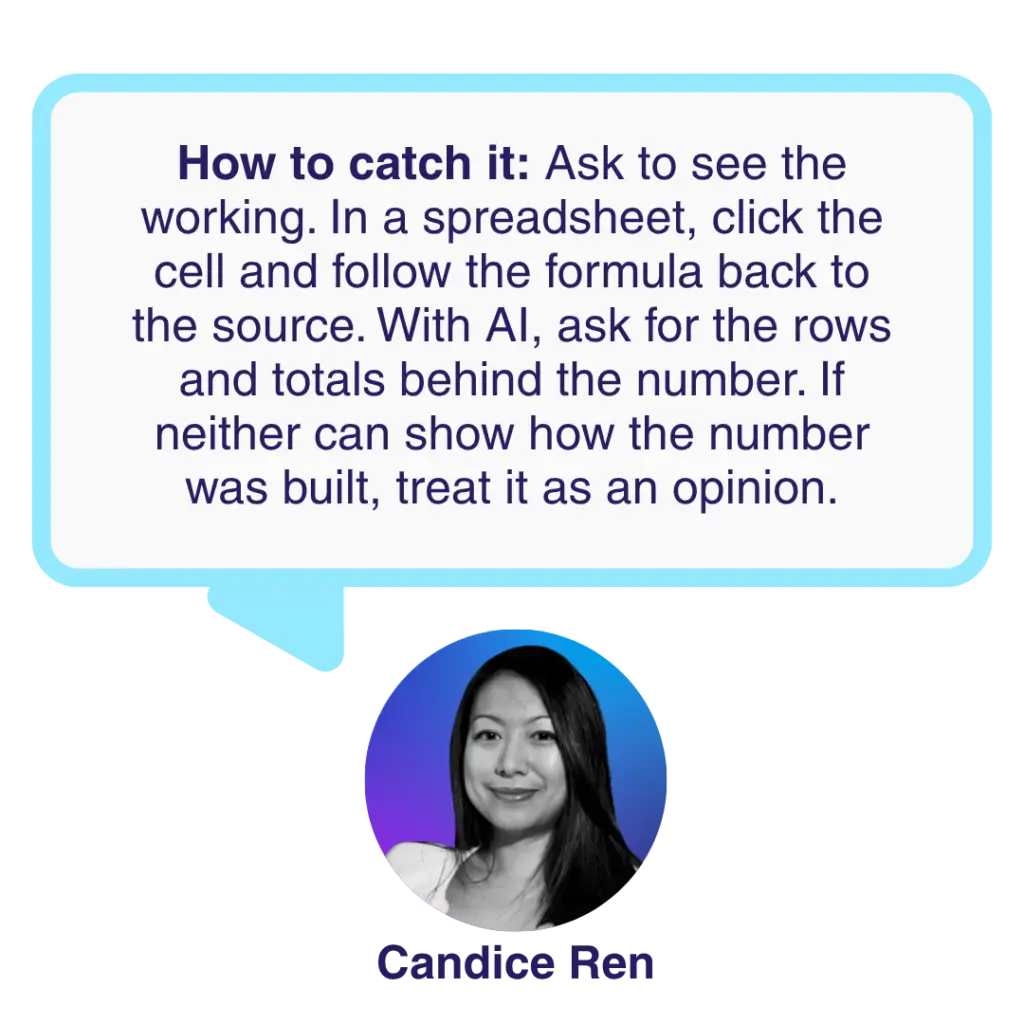
They give you an answer, not the evidence
A spreadsheet shows you a number, not how it was built. An AI tool gives you a paragraph, not the rows behind it. Either way, you are asked to trust the result.
For example, you ask how many customers renewed last quarter and get 412. Is that customers, subscriptions or invoices? You cannot tell from the answer.
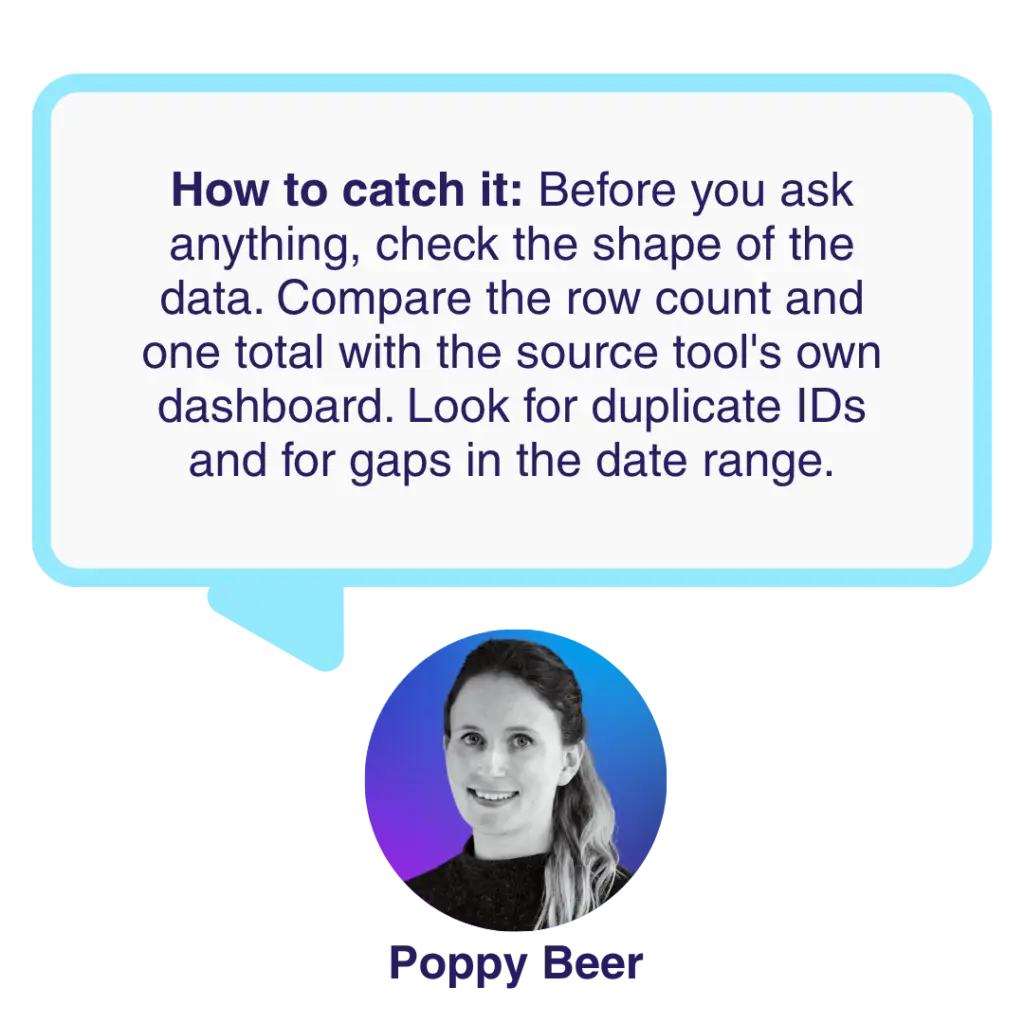
They work from whatever you hand them
Neither tool knows what is missing, duplicated or broken before the data reached it. It analyses the file in front of it, and says nothing about the file that should have been there.
For example, you export last quarter’s payments from your billing tool, and the file leaves out refunds and failed payments, which sit in a separate report. The answer is wrong by the amount refunded, and it looks exactly like a right answer.
Expert help is only a call away. We are always happy to give advice, offer an impartial opinion and put you on the right track. Book a call with a member of our friendly team today.
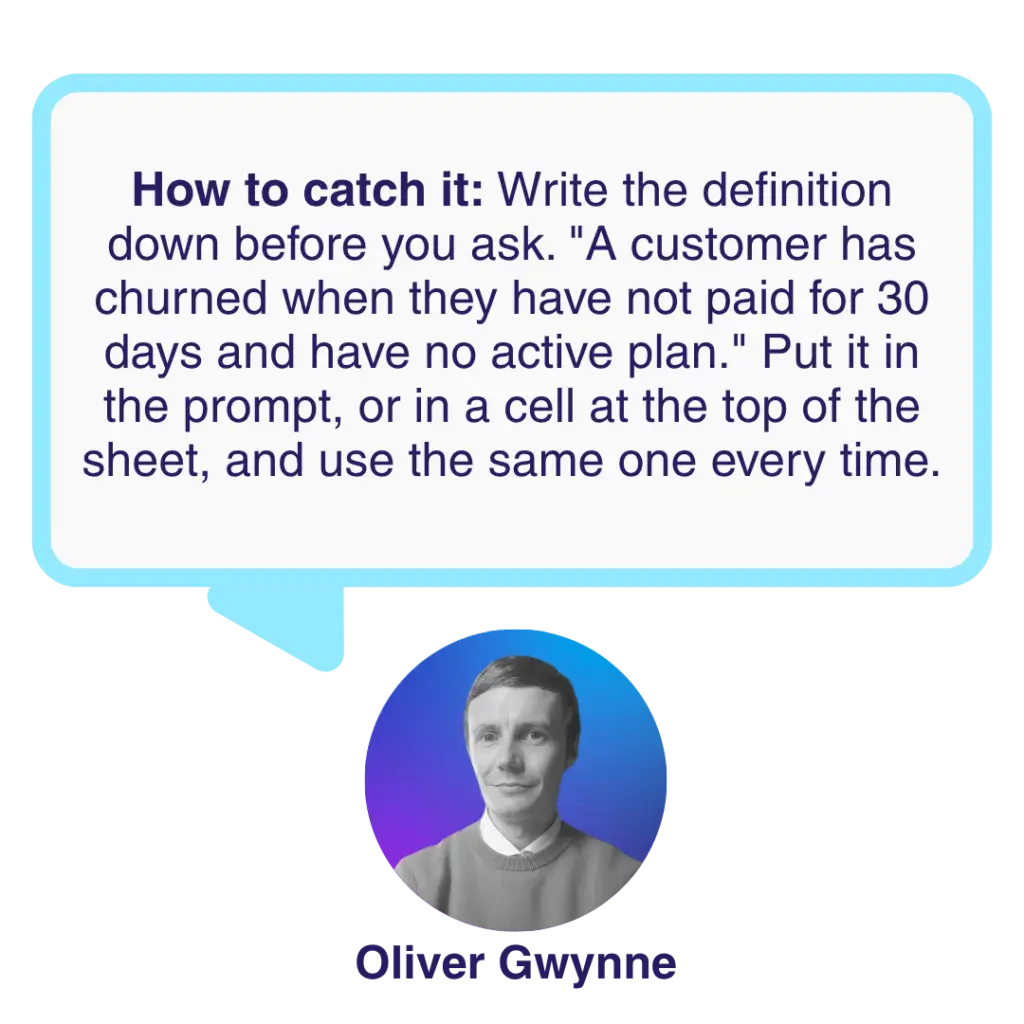
They do not know what you mean
Customer, churn and revenue mean different things in different tools, and neither a spreadsheet nor an AI tool will ask which one you mean. It picks one and carries on.
For example, you ask how many customers churned last quarter. Does a customer who paused count? One who downgraded? One who left and came back within a week? The answer changes with each choice.
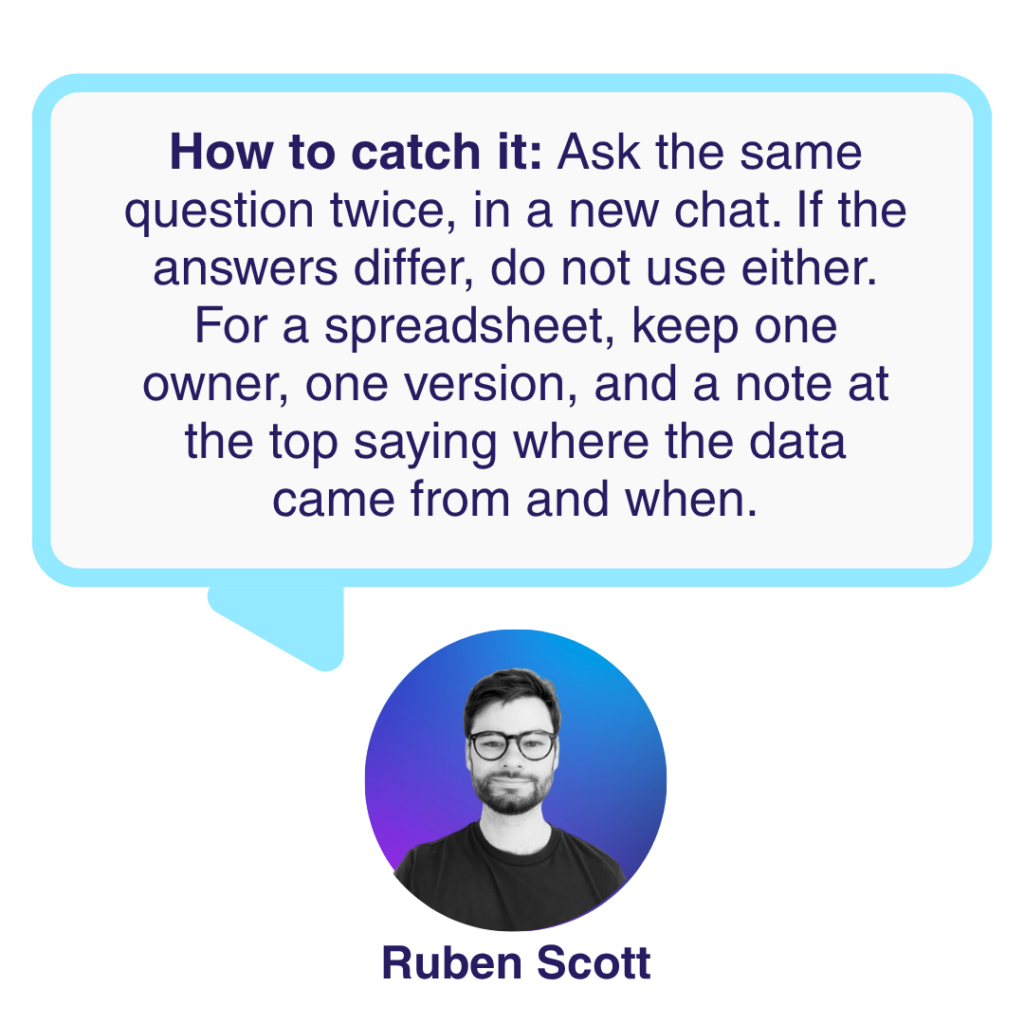
They are hard to repeat
A spreadsheet depends on who built it, and an AI tool can answer differently each time you ask. Either way, the same question can give you two numbers.
A spreadsheet goes wrong when the person who built it leaves, the formulas are half understood, and three copies are called “final”. An AI tool can give a different answer in a new chat, or when you run it again next month.
They fail quietly
Neither tool gives you an error when something goes wrong. You get a number that looks right.
In 2020, Public Health England left almost 16,000 positive Covid tests out of its daily figures. The results were being collected in an older spreadsheet file format with a size limit, and the records that did not fit were left off without a warning. AI tools can do something similar: some will read only part of a large file and still answer with full confidence.
Neither tool is fit for purpose
It might feel strange to compare AI with excel, but neither is fit for purpose once you start to scale. In order to have a reliable base for reporting, you need to set up analytics properly. This means:
Get the data behind that question into a warehouse, arriving automatically.
Tie it to the same customer across your tools.
Model it: write the definitions once, and add tests.