
Freemium is not a generous marketing gesture or a friction-reducing sales tool. It is a data collection engine that generates continuous information about customer behaviour, value perception, and conversion dynamics that would be impossible to obtain any other way.
Signal
Your free tier is generating signups but conversion is weak, costs are climbing, and you are not sure which levers to pull.
Stakeholders
Founders, Heads of Product, Growth Leads, and anyone responsible for pricing, packaging, or acquisition strategy.
Strategy
Treat the free tier as an experimental platform. Instrument every interaction, analyse the resulting patterns by segment and iterate.
The True Purpose Of Freemium
The strategic value of freemium lies not in its marketing appeal but in its capacity to reveal what customers actually value. Every interaction a free user has with your product produces a signal. The volume and richness of that signal vastly exceeds what you can obtain from paid customers alone or from traditional research.
Free users have no financial commitment and no incentive to push through friction. When they abandon, they do so immediately and honestly. That ruthless attrition functions as a diagnostic. If 60% of free signups never complete initial setup, your paid customers are probably struggling with the same process but gritting their teeth through it. If free users consistently abandon after viewing a particular screen, that element is costing you conversions in ways your paid data will never show clearly.
Feature adoption patterns reveal what customers genuinely value, as distinct from what they tell you in interviews. Features with high adoption and strong correlation to conversion should be prominent in your value proposition and potentially gated to drive upgrades. Features with low adoption despite prominent positioning indicate either product-market misalignment or messaging failures. The data makes this distinction visible. Intuition usually does not.
Three Freemium Structures
Freemium models typically fall into one of three archetypes, each with distinct conversion mechanics.
Capacity-limited freemium, as used by Notion and Slack, allows access to full functionality but constrains usage through quantitative limits. The conversion trigger emerges organically from the user’s own success: they hit limits because they have been using the product genuinely. This creates positive conversion sentiment rather than resentment. The calibration challenge is real: set limits too low and users hit them before experiencing sufficient value; set them too high and users exist comfortably in the free tier indefinitely. The right limit is the point where users have established clear value but are actively constrained by the boundary.
Feature-limited freemium, as used by Canva and LinkedIn, gates premium capabilities behind paid plans. The model works when gated features represent genuine upgrades rather than essential functionality. When designed well, users feel they are accessing better tools, not unlocking basic usability. The failure mode is getting the gate placement wrong in either direction: a crippled free experience prevents users building sufficient engagement to convert; too few gated features means paid tiers lack compelling differentiation.
Time-limited trials provide full access for a fixed period before access expires or reduces. The model concentrates evaluation and creates urgency, which suits products with longer learning curves. The challenge is matching trial length to value realisation time. A 14-day trial for a product that takes three months to deliver clear value will convert poorly. The psychological dynamic also differs from other models: users who have not fully explored the product within the window often abandon rather than pay, because they feel they have not adequately evaluated whether it is worth the cost.
Many successful products combine elements of more than one model. The sophistication lies not in choosing a pure approach but in understanding which combination of conversion triggers creates the right dynamics for your context.
Expert help is only a call away. We are always happy to give advice, offer an impartial opinion and put you on the right track. Book a call with a member of our friendly team today.
How Free Users Self-Segment
Free users naturally sort themselves into conversion segments through their behaviour, without any intervention from you.
Power users hit limits quickly and repeatedly. They have adopted the product deeply, integrated it into regular workflows, and are experiencing genuine constraints on usage they already value. The strategic priority here is reducing friction in the upgrade path rather than creating additional conversion pressure. They are already motivated. Your job is to make the upgrade easy, clear, and compelling. They are also your richest source of feedback and feature insight.
Casual users rarely return after initial exploration. They might have signed up with genuine interest but never established consistent usage patterns. Distinguishing between users who have not yet discovered value and those for whom your product is not a genuine fit requires looking at early activation behaviour. Users who complete onboarding and adopt at least one core feature have reasonable conversion potential. Users who sign up but never complete setup are unlikely to convert regardless of what you send them.
Team users convert through different dynamics entirely. One person discovers the product, invites colleagues, adoption spreads, and conversion happens when the team collectively decides the value justifies paying. These cycles are longer and less predictable because they involve consensus rather than individual decision-making. The strategic response is to facilitate rather than force: make collaboration easy, demonstrate ROI at the team level, and price in a way that accommodates gradual expansion.

































Tracking What Actually Matters
Most companies measure freemium through vanity metrics. The metrics that drive decisions are more specific.
Activation deserves the most attention because users who never activate never reach conversion. Defining activation properly means identifying the specific action that predicts long-term engagement, not merely completing signup. Low activation rates reveal friction or value communication failures that affect every subsequent metric.
Engagement should distinguish between depth and frequency. Some products succeed with infrequent but intensive usage. Others require consistent daily return. Understanding which pattern indicates health for your product requires correlating usage patterns with eventual conversion outcomes.
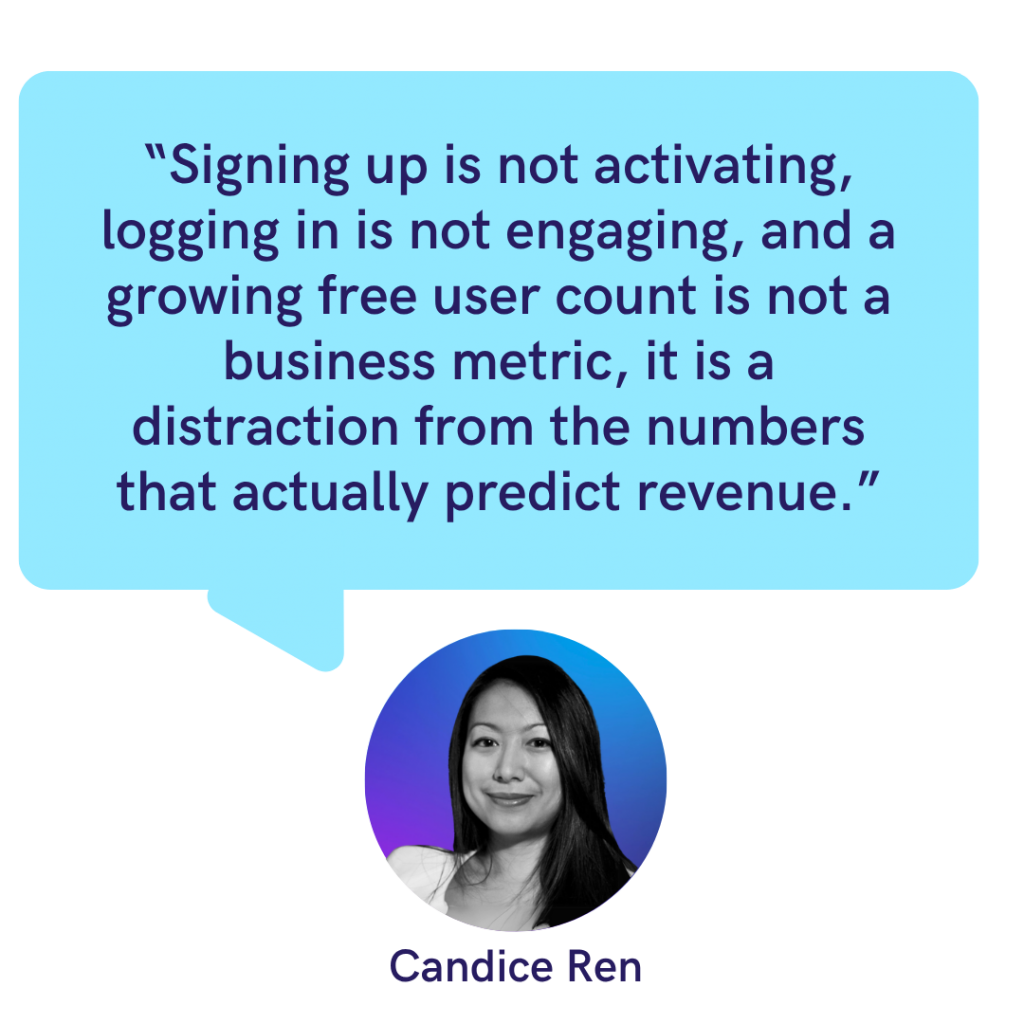
The aha moment, the specific action or threshold that predicts conversion, transforms freemium optimisation from guesswork to something more disciplined. Once identified, it becomes the experience you optimise onboarding to deliver as quickly as possible. Finding it requires cohort analysis connecting early behaviours to later conversion outcomes. It is rarely the most popular feature or the one you think is most important.
Time-to-upgrade curves reveal natural conversion timelines by segment. Enterprise users take longer than SMB users. Team adoption takes longer than individual conversion. Understanding these patterns prevents premature optimisation and helps calibrate expectations. Freemium-to-paid lifetime value by cohort tells you whether free conversions produce customers comparable to those from other acquisition channels, or whether you are converting users who stay at minimum commitment and churn quickly.
When To Fix It & When To End It
Freemium becomes a cost centre when infrastructure, support, and opportunity costs exceed the lifetime value generated from eventual conversions. The calculation requires honest accounting: infrastructure for free user data, support for free user questions, opportunity costs from positioning confusion and product complexity, and sales friction when prospects cannot understand why they should pay given the free tier exists.
Trial-only models sometimes outperform freemium by concentrating evaluation into windows that force decisions. Freemium typically generates higher conversion volume but lower conversion quality and longer conversion cycles. Trials generate lower volume but higher quality and faster cycles. Which is better depends on your unit economics and what stage of growth you are in.
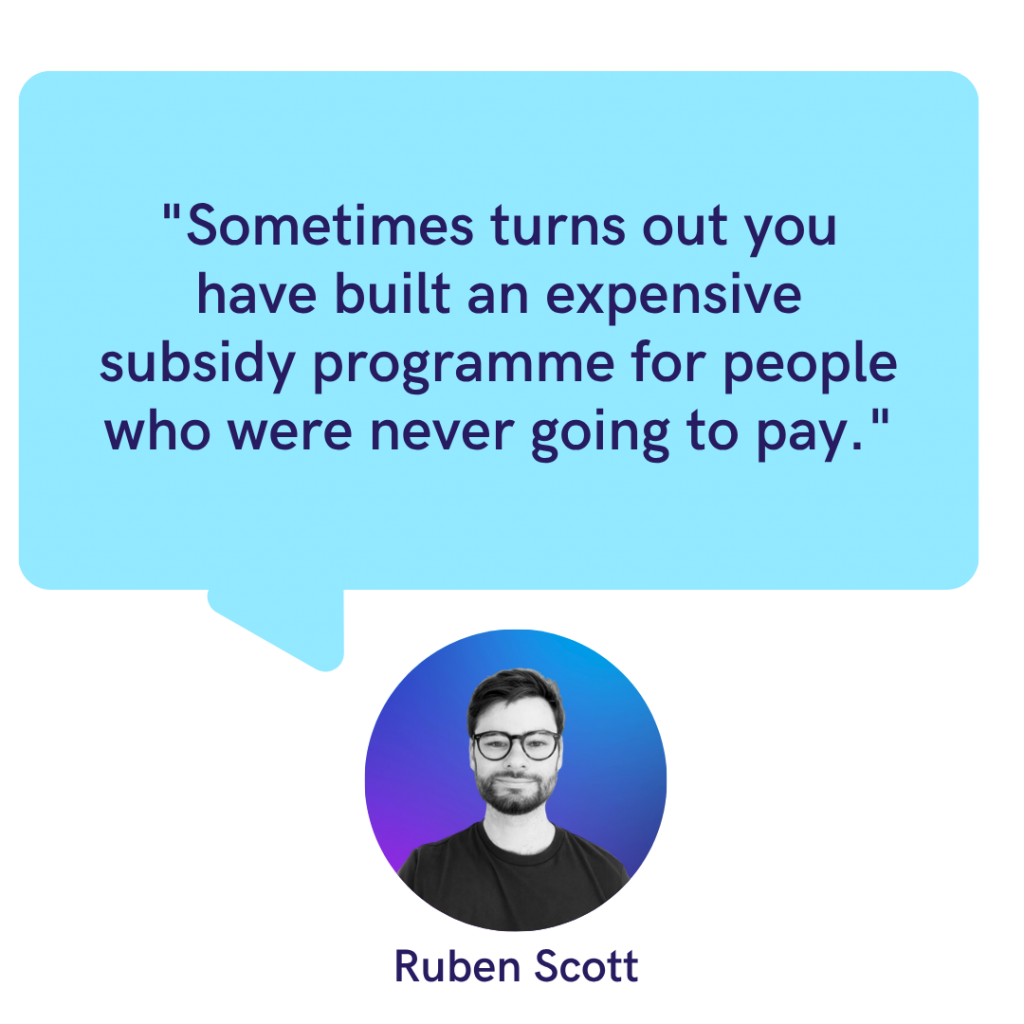
Fixing freemium rather than ending it requires honest diagnosis. Low conversion because users cannot figure out the product is an onboarding problem. Low conversion because free limits never constrain anyone is a calibration problem. Low conversion because paid features do not provide compelling value is a packaging problem. The fix in each case is different, and misdiagnosing the cause produces wasted experiments.
Most importantly, fixing freemium requires treating it as a dynamic system rather than a static offering. The companies that operate freemium well run continuous experiments, track comprehensive metrics, and maintain honest enough discipline to make difficult decisions about whether the economics still make sense.
Get In Touch
Our friendly team are always on hand to answer questions, troubleshoot problems and point you in the right direction.
