
This article explores why lifetime value represents the most critical metric for subscription businesses, how it differs from simpler revenue measurements, and how ot can drive growth.
Signal
Many subscription businesses struggle to understand which customers, channels, and behaviours actually generate profitable long-term value.
Stakeholders
Chief Marketing Officer, Head of Growth, Growth Lead, Chief Revenue Officer, Finance Director, Founder
Strategy
Build a growth strategy around customer lifetime value and cohort analysis, connecting acquisition, retention, product usage and revenue data
Defining LTV In Subscription Contexts
Customer Lifetime Value (LTV) represents the net revenue a business expects to generate from a customer over the course of their relationship. For subscription businesses, LTV is both easier to calculate and more strategically important than in transactional models, as recurring revenue creates predictable value over time.
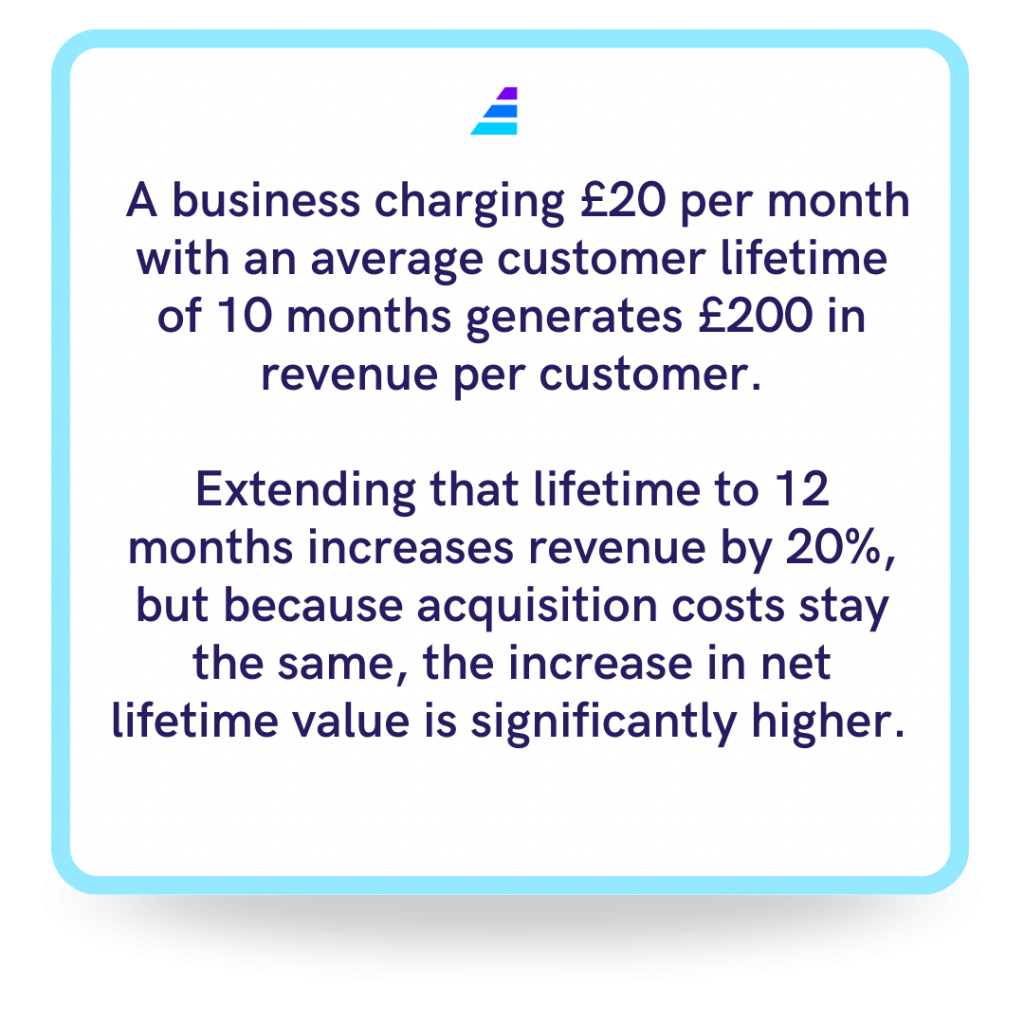
A simple example might multiply monthly price by subscription length, but true LTV goes further. It accounts for retention patterns and subtracts the real costs of serving customers, including platform fees, payment processing and support, to reflect each customer’s actual contribution.
This is why LTV is more informative than metrics like Average Revenue Per User. ARPU shows how much users pay in a given period, but says nothing about how long they stay. Two businesses with identical ARPU can have very different economics if one retains customers for significantly longer.
Subscription models also allow businesses to actively increase lifetime value. Improvements in retention, pricing, product features and customer success all directly impact LTV in measurable ways. As a result, LTV-focused businesses evaluate growth through customer quality and long-term value, rather than acquisition volume or short-term revenue alone.
The Compounding Effect Of Retention
The mathematics of lifetime value reveal a simple but powerful truth: small improvements in retention can drive disproportionately large increases in lifetime value. Yet many subscription businesses continue to over-invest in acquisition while under-investing in retention.
Acquisition-led growth can look impressive while remaining unprofitable. Acquiring customers who churn quickly not only limits revenue but actively destroys value when acquisition costs exceed lifetime value.
Higher lifetime value also enables more competitive acquisition. Businesses with stronger retention can afford to spend more to acquire customers while maintaining healthy returns, often gaining advantages in ad auctions and placement. Retention further compounds through referrals, as long-term customers are more likely to recommend the product and embed it into their workflows.
Despite these benefits, retention is often deprioritised because its impact emerges gradually and is harder to attribute than acquisition. Businesses that recognise and correct this imbalance unlock one of the most powerful and sustainable drivers of long-term subscription growth.

Why Volume Alone Misleads
Many businesses realise too late that acquisition-led growth has masked weakening unit economics. Large numbers of users are acquired through aggressive marketing, only to churn quickly and fail to recoup acquisition spend. The business appears to grow while actually destroying value with each new customer.
The core issue is assuming all customers are equal. In subscription models, customer value varies widely. Some customers stay for years and expand their usage, while others churn within weeks and generate minimal revenue. Acquisition strategies optimised purely for volume tend to attract the latter, through broad targeting, heavy discounts and conversion-focused creative that sets poor expectations.
Delayed feedback loops make this problem worse. The true value of acquired customers only becomes clear months later, once retention patterns emerge. By then, poor-quality acquisition strategies may already be deeply embedded.
Expert help is only a call away. We are always happy to give advice, offer an impartial opinion and put you on the right track. Book a call with a member of our friendly team today.
Cohort-Based Analysis vs Segment Averages
Understanding lifetime value properly requires moving beyond aggregate averages and analysing customer cohorts over time.
Cohort analysis groups customers by shared characteristics: such as acquisition period, channel or campaign, and tracks their retention and revenue over time. This reveals patterns that averages miss, such as which channels deliver longer-retained customers, how product changes affect retention, or which onboarding behaviours correlate with higher lifetime value.
For subscription businesses, cohort analysis typically starts by grouping customers by acquisition month or quarter and observing retention curves across subsequent periods. Comparing these curves across channels or campaigns often overturns assumptions based on volume metrics, showing that lower-volume sources can deliver far higher lifetime value.
Cohort analysis also helps identify high-value behaviours and measure the real impact of product, pricing or onboarding changes. More advanced approaches account for customers who are still subscribed, avoiding bias by estimating future value based on observed retention patterns.
Implementing this analysis requires data infrastructure that connects acquisition, product and revenue data at the individual customer level. While this investment is non-trivial, it unlocks insights into customer value that are impossible to obtain from fragmented systems or high-level averages alone.


Unlocking Hidden Lifetime Value Potential
Sophisticated lifetime value analysis uncovers opportunities that many subscription businesses miss: small customer segments driving disproportionate value, behaviours that reliably predict retention, and acquisition channels that deliver high-quality customers despite modest volumes.
In many businesses, a minority of customers generates the majority of lifetime value through longer retention, higher willingness to pay and expansion revenue.
Identifying these segments allows companies to target similar customers, tailor product development to their needs and focus retention efforts where they have the greatest impact. These high-value segments are often defined less by demographics and more by behaviour, such as feature adoption, engagement frequency or early usage patterns.
Lifetime value analysis also highlights critical intervention points in the customer journey. Cohort analysis can reveal moments where retention outcomes diverge, indicating where onboarding, product or customer success efforts will deliver the greatest returns. Pricing and expansion strategies benefit in the same way, showing which pricing tiers attract durable customers and which features drive upgrades and long-term revenue growth.
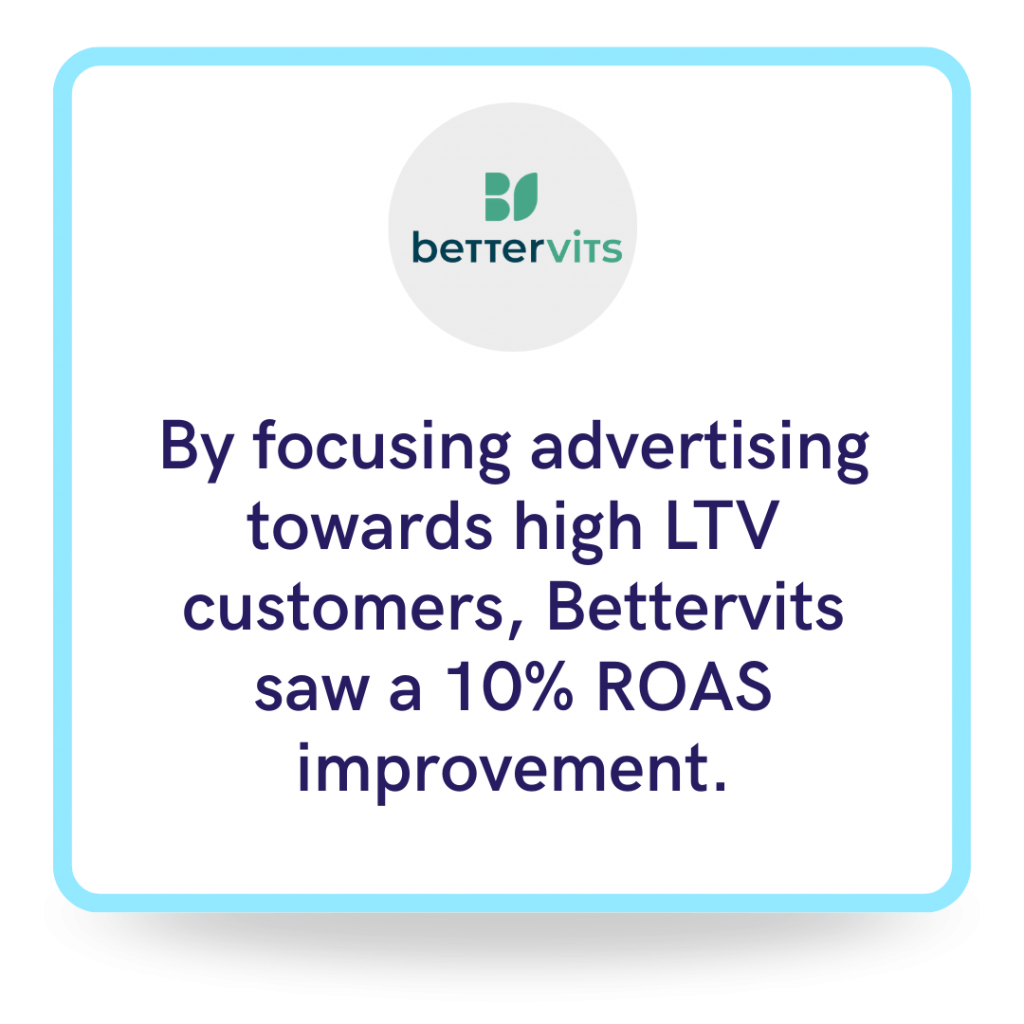
Marketing attribution becomes far more accurate when evaluated through lifetime value rather than short-term conversion metrics. Channels that look weak by immediate performance often deliver customers who stay longer, expand more and refer others, while high-volume channels may underperform once churn is considered.


































Audit Your Lifetime Value Understanding
For subscription businesses recognising that their current lifetime value understanding falls short of business needs, the path forward begins with comprehensive auditing of existing metrics, data infrastructure, and analytical capabilities.
Start by examining how your business currently calculates and uses lifetime value. Do you calculate it at all? If so, does the calculation incorporate actual retention patterns from your customer base, or does it rely on assumed averages? Does it account for costs of serving customers, or merely calculate gross revenue? Do different teams within your organisation use conflicting lifetime value definitions, leading to strategic misalignment? Does anyone actually make decisions based on lifetime value calculations, or do they exist primarily to satisfy investor reporting requirements?
Evaluate your data infrastructure for lifetime value analysis. Can you cleanly connect customer acquisition sources to subscription records to revenue history? Do you maintain cohort-based retention data, or only aggregate averages? Can you segment customers by acquisition channel, campaign, creative, and other relevant dimensions? Do you track behavioural signals that might predict lifetime value, feature usage, engagement patterns, support interactions? Can you calculate lifetime value for specific customer segments, or only across your entire customer base?

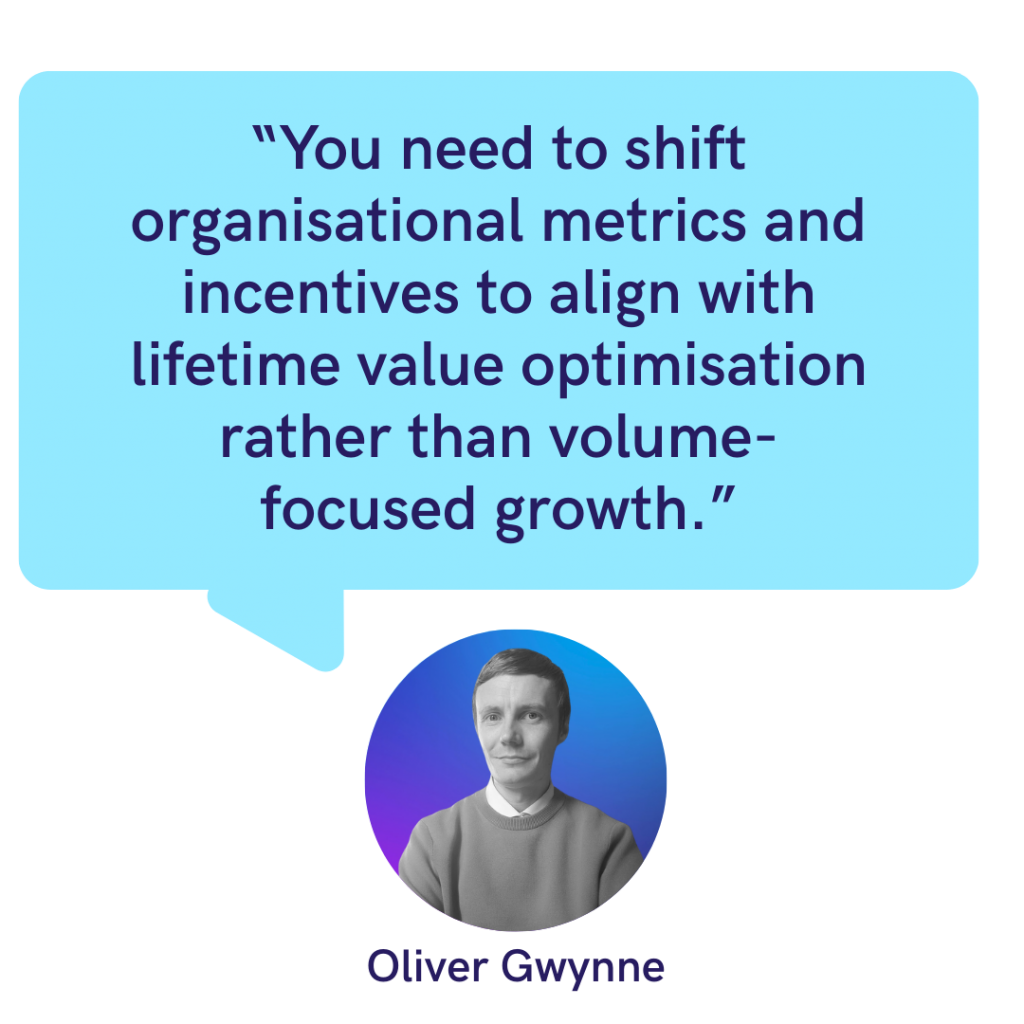
Assess whether your current business decisions reflect lifetime value thinking or remain anchored to immediate metrics. When evaluating marketing channels, do you consider multi-month retention patterns or only immediate conversion rates? When planning product development, do you prioritise features that drive retention and expansion alongside those that increase conversion? When setting pricing, do you optimise for lifetime value or immediate revenue maximisation? When designing onboarding experiences, do you focus on encouraging behaviours correlated with high lifetime value or merely driving immediate activation?
Many subscription businesses discover through this auditing process that their lifetime value capabilities lag far behind their strategic needs. Addressing these gaps requires capabilities spanning data engineering, analytics, and strategic planning. You need to build or improve data pipelines that unify customer information across acquisition, product usage, and revenue systems.
You need to implement analytics that calculate lifetime value properly across relevant customer segments and cohorts. You need to develop reporting that makes lifetime value insights accessible to decision-makers across marketing, product, and executive teams.
For many businesses, developing these capabilities internally proves challenging. The combination of data engineering expertise required to build proper infrastructure, analytical sophistication needed for cohort analysis and statistical modelling, and strategic business context necessary to translate insights into action rarely exists within single organisations. The technical components alone, building data warehouses, implementing transformation pipelines, integrating disparate data sources, represent months of engineering work before any analytical value emerges.
At 173tech, we specialise in exactly this challenge. We help subscription businesses audit their current lifetime value capabilities, identify gaps between their strategic needs and existing infrastructure, and build the data systems and analytical frameworks that enable sophisticated lifetime value optimisation. Our engagements typically begin with comprehensive audits that assess data infrastructure, analytical capabilities, and strategic use of lifetime value insights. We then design and implement solutions spanning data pipeline development, analytics platform configuration, and strategic framework development that position businesses to make lifetime-value-informed decisions across acquisition, retention, and product strategy.
Conclusion
The businesses that master lifetime value analysis develop sustainable competitive advantages that compound over time. They acquire better customers through channels their competitors overlook. They retain customers longer through data-informed retention strategies. They expand revenue from existing customers through targeted approaches informed by expansion patterns in historical data. They make product decisions that optimise for long-term value rather than immediate conversion. Each of these improvements builds on the others, creating widening performance gaps that eventually become impossible for competitors to bridge.
The starting point for this transformation lies in honestly assessing where your lifetime value capabilities currently stand and committing to building the infrastructure and analytical sophistication that enables true lifetime-value-driven strategy. For subscription businesses serious about sustainable growth, this assessment represents one of the most valuable exercises possible, revealing not just where you are but illuminating the path toward where you need to be.
Get In Touch
Our friendly team are always on hand to answer questions, troubleshoot problems and point you in the right direction.
