
Most subscription businesses think they know what drives lifetime value (LTV). In reality, their assumptions rarely match the data. The companies that win are the ones that test what actually predicts LTV, then align acquisition, product, onboarding, and pricing around it.
Signal
You are acquiring customers and growing revenue, but retention, payback, or LTV feels unpredictable.
Stakeholders
Subscription founders, growth leaders, and finance teams who care about improving unit economics, not just increasing signups.
Strategy
Identify the early behaviours that actually predict lifetime value, connect them to revenue at a 1:1 level, and align your journey.
Introduction
At 173tech, we regularly analyse customer data for subscription businesses convinced they understand which characteristics drive lifetime value, only to discover that their actual customer economics bear little resemblance to their assumptions.
This article explores why common assumptions about customer value prove unreliable, which characteristics actually predict lifetime value across various subscription categories, and how businesses can apply these insights to improve customer acquisition and retention.
Debunking Common Myths About Customer Value
“Rich customers pay more.” Ability to pay does not equal retention. Smaller or less wealthy customers often retain better if they genuinely depend on your product.
“Big companies are better customers.” Enterprise buyers can have higher churn due to bureaucracy, budget scrutiny, and vendor switching. Smaller teams embedded in your product may retain longer.
“Early adopters and sophisticated users are best.” Power users often churn faster because they evaluate alternatives critically. Less sophisticated users who find clear value can be more loyal.
“C-suite buyers are more stable.” Executive-sponsored tools can disappear when leadership changes. Products with real day-to-day usage often retain better.
“More features used = more value.” Sometimes the highest-retention customers use one critical feature extremely well. Breadth of usage doesn’t always mean depth of value.
“Higher pricing tiers mean higher LTV.” Premium customers may churn more due to scrutiny and expectations. Lower-tier customers can generate higher LTV through better retention.

What Actually Predicts Lifetime Value
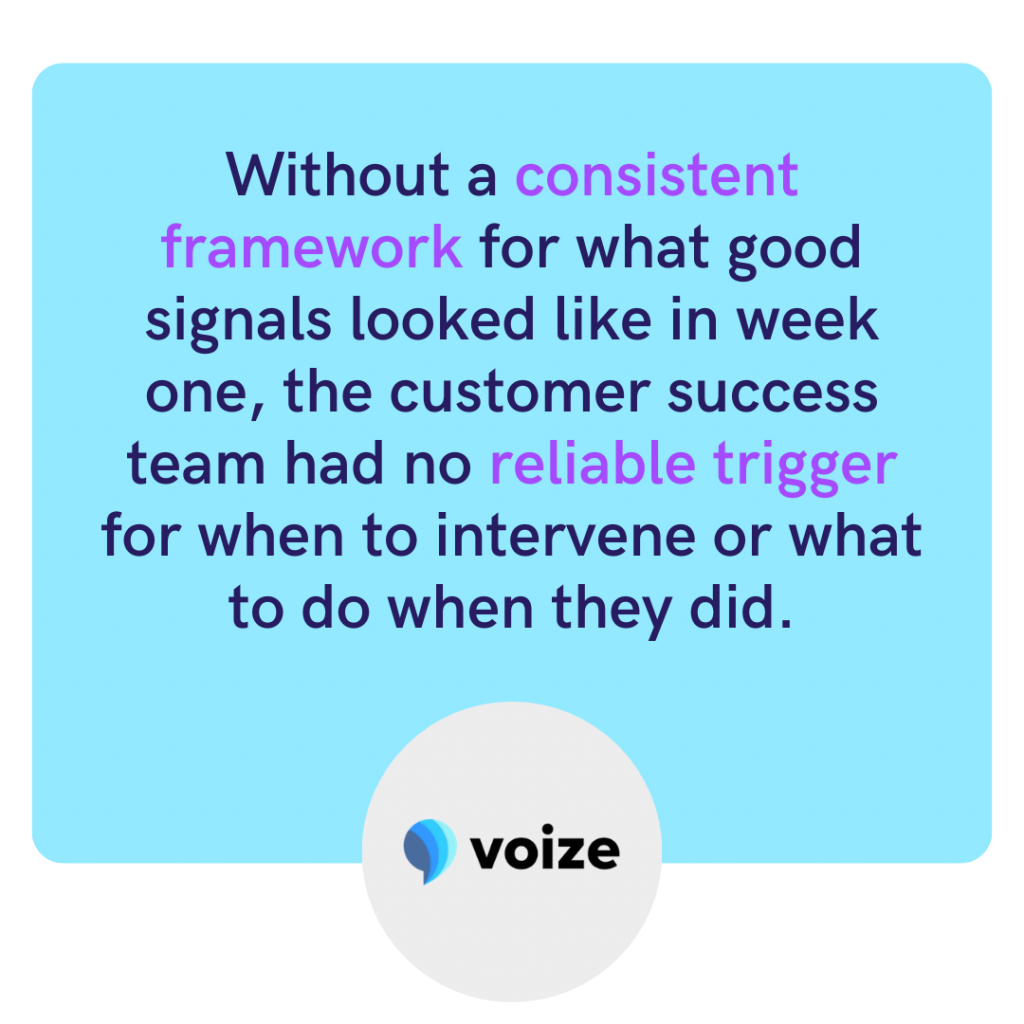
Sustained Usage (Not Just Early Activity): Customers who use your product consistently over time retain far better than those who spike early and disappear. Heavy usage in week one often reflects exploration. Steady usage over months reflects embedded value. Habit formation, workflow integration, and perceived ongoing benefit are what drive retention, not initial excitement.
Adoption of Specific “Sticky” Features: Not all usage is equal. Certain features act as retention anchors: integrations, automation tools, collaboration layers, reporting dashboards, or workflow-critical components. Customers who adopt these features early often; extract deeper value, build switching costs & integrate you into daily processes. The key insight isn’t total usage volume, it’s which features predict retention in your product.
Onboarding Completion: Customers who complete onboarding properly retain more, but even more important are specific onboarding behaviours. Certain early actions disproportionately predict long-term value. Identifying and driving those actions is high leverage.
Integrations & Ecosystem Embedding: Customers who connect your product to other tools almost always retain better. Standalone users can churn easily. Embedded users rarely do.
Team Collaboration & Multi-User Adoption: For B2B subscriptions especially, multi-user behaviour is one of the strongest predictors of LTV. When teams collaborate in-platform, multiple stakeholders rely on it and workflows span users then retention becomes organisational, not individual. That dramatically increases lifetime value.
Payment Commitment & Billing Behaviour: Annual billing, automatic payments, and proactive card updates consistently correlate with higher LTV. Partly this is self-selection: committed customers choose annual.Partly it’s commitment psychology, prepayment increases motivation to extract value. Payment behaviour often reveals seriousness more clearly than demographics.
Referral Behaviour: Customers who refer others are usually; genuinely satisfied, deriving real value and confident in your product. Referrers retain longer and often expand faster.
Support Interaction Patterns: Support isn’t a negative signal by default. Customers who raise issues, seek help and engage in resolution will often retain better IF issues are resolved successfully. Silence can sometimes signal disengagement, not satisfaction.
The Critical Requirement: None of this works unless you link Customer behaviour (events in your product) with Revenue data (subscription or billing systems) on a true 1:1 basis. Without that connection, you cannot identify what genuinely predicts lifetime value, only what looks correlated at surface level.

Expert help is only a call away. We are always happy to give advice, offer an impartial opinion and put you on the right track. Book a call with a member of our friendly team today.
Linking Characteristics To Targeting
Identifying what predicts lifetime value is only half the work. The real leverage comes from translating those insights into how you acquire, onboard, price, and support customers. Data without operational change is just reporting.
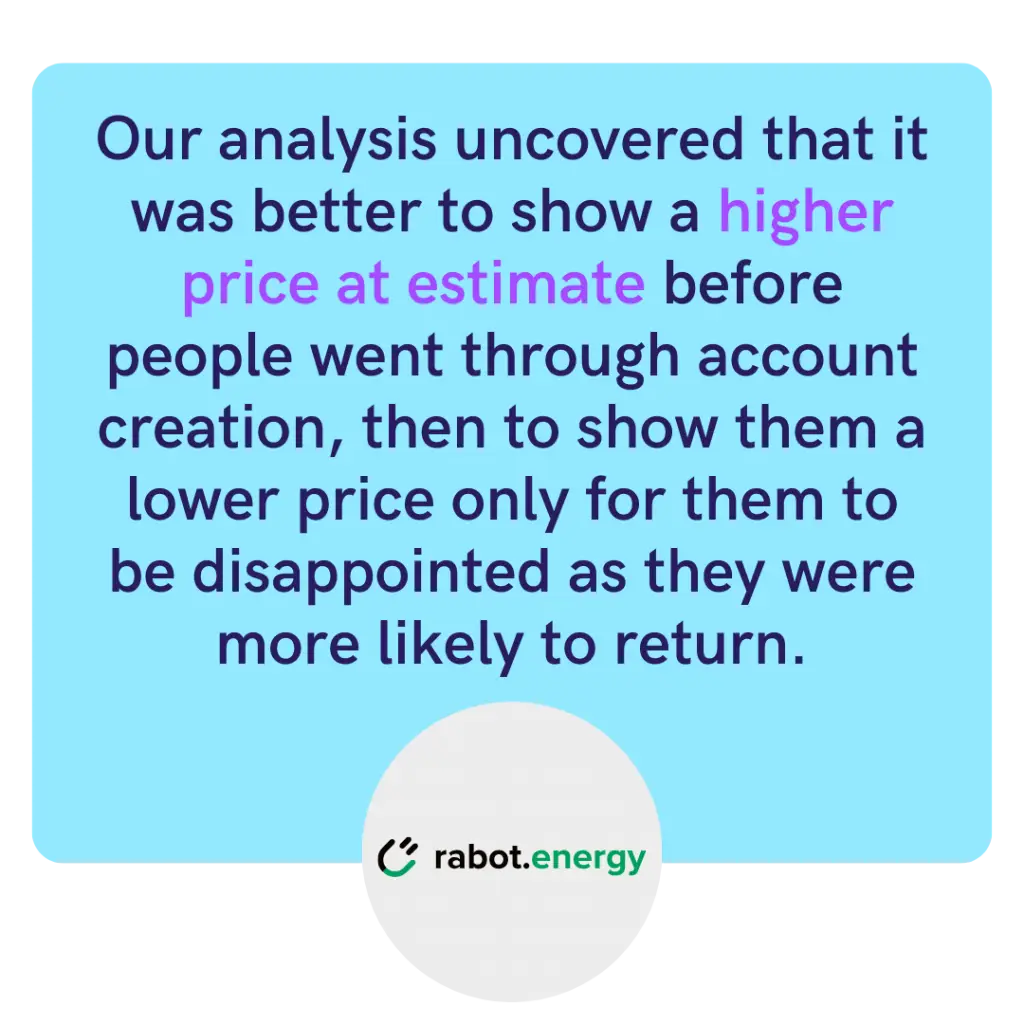
Channel, Creative & Qualification: Different channels attract different behavioural profiles. High-intent channels often produce customers more likely to complete onboarding and adopt predictive features, even if volume is lower. Creative and landing pages act as filters: feature-specific messaging, transparent pricing, and realistic expectation-setting may reduce conversion rates, but they pre-select for customers more likely to retain. Growth becomes less about maximising signups and more about engineering for customer quality.
Product, Pricing & Early Behaviour: Acquisition alone cannot solve LTV. Onboarding should deliberately drive the specific actions that predict retention, whether that’s integrations, configuration, or team invites. Pricing should reinforce commitment, for example through annual plans or feature gating aligned with high-value behaviours. Every stage of the journey should steer customers toward the patterns proven to drive lifetime value.
Continuous Optimisation: Predictive characteristics evolve. As products, markets, and competitors change, the behaviours that once signalled high LTV may weaken. The feedback loop between analysis and acquisition must be continuous, supported by early predictive modelling so campaigns can be evaluated within weeks rather than quarters.
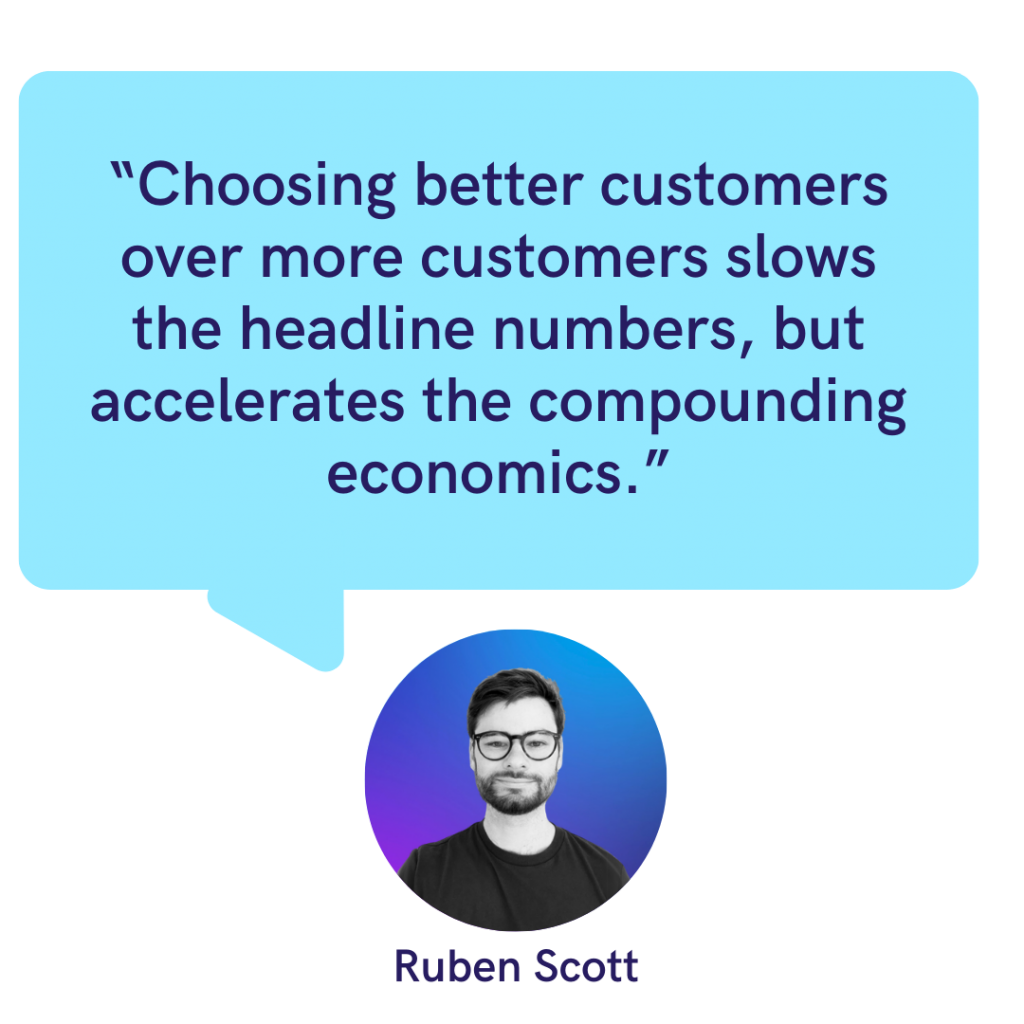
The Strategic Trade-Off: Optimising for high-LTV characteristics often reduces immediate acquisition volume. Narrower targeting and stronger qualification lower short-term growth metrics but dramatically improve payback, retention, and long-term unit economics. The advantage compounds, but only if leadership is willing to prioritise quality over volume.

















Using Predictive Analytics to Identify Campaign Success from Day One
The Problem with Delayed Feedback: Traditional lifetime value measurement forces you to wait months before knowing whether a campaign was profitable. By the time retention data becomes clear, you may have over-invested in low-quality channels or underfunded high-value ones. This lag makes acquisition optimisation slow and capital inefficient.
Identifying Early Predictive Signals: Predictive analytics solves this by isolating early behaviours (visible within days or weeks) that strongly correlate with long-term retention. Onboarding completion, early feature adoption, usage frequency, integrations, billing choice, and engagement consistency often provide powerful forward-looking signals. These behaviours become leading indicators of lifetime value rather than waiting for churn to occur.
From Signals to Campaign Decisions: By modelling the relationship between early behaviour and historical LTV, you can estimate campaign performance within the first billing cycle. Campaigns generating high signup volume but weak early engagement can be reduced quickly, while those attracting customers with strong predictive patterns can be scaled confidently, even if surface conversion metrics look modest.
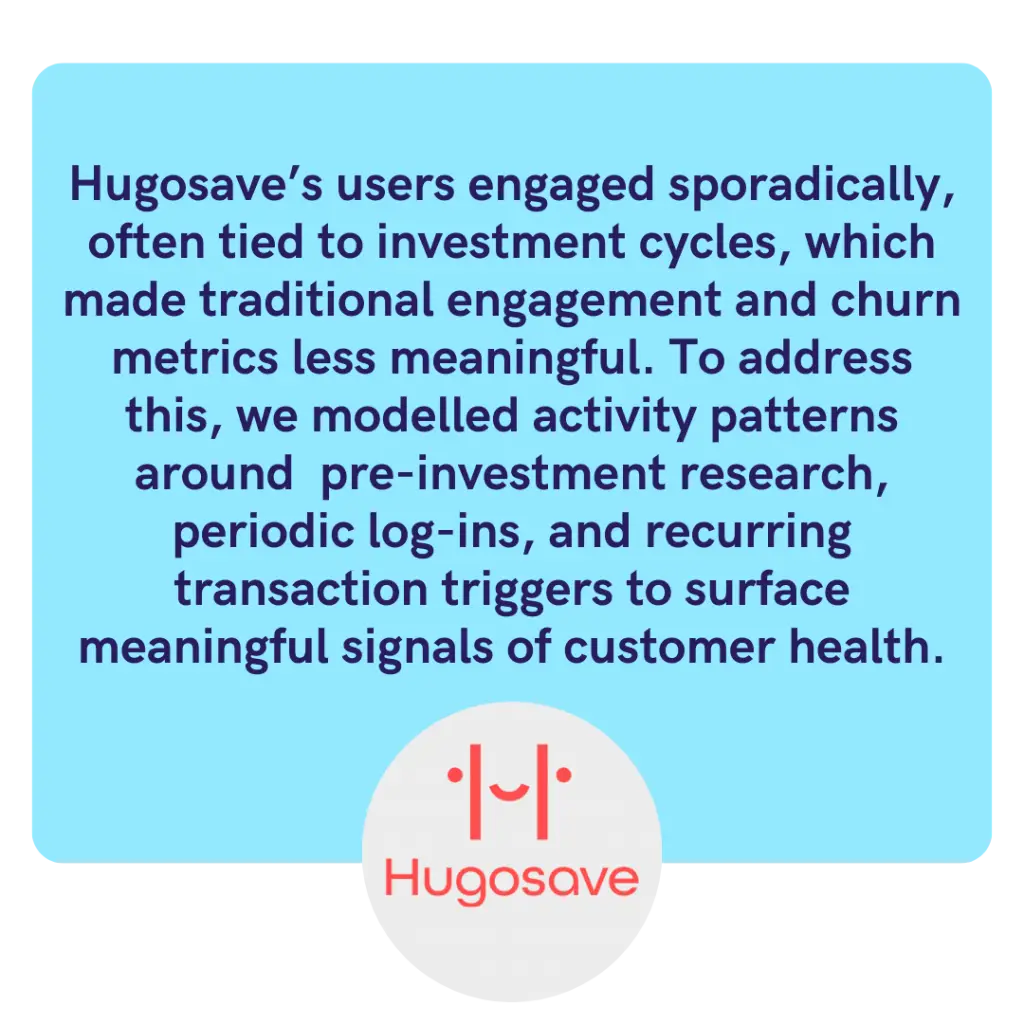

Composite Modelling & ROI Estimation: Lifetime value rarely depends on a single action. Combining multiple early signals into predictive models provides a more accurate estimate of cohort value. Aggregating these predictions across newly acquired customers allows you to approximate campaign ROI within weeks instead of quarters, enabling faster experimentation and budget reallocation.
Continuous Validation: Predictive systems must be recalibrated regularly. Early LTV estimates should be compared with actual retention outcomes as cohorts mature, ensuring models remain accurate as customer behaviour, product features, and market conditions evolve. When validated continuously, predictive analytics transforms acquisition from reactive reporting into proactive optimisation.
Conclusion
If your understanding of customer value is still driven more by instinct than data, the first step is straightforward: identify which characteristics actually predict lifetime value in your business. That means connecting customer behaviour directly to revenue, building the analytical capability to spot real patterns, and having the discipline to act on the findings, even when they challenge long-held assumptions.
Companies that make this shift from intuition to evidence don’t just improve acquisition efficiency. They change how decisions are made across the business. Strategy becomes grounded in what customers actually do, not what feels right or reflects industry convention. Over time, that evidence-led approach compounds into a durable competitive advantage.
If you’d like support making that transition, the team at 173tech would be happy to help.
Get In Touch
Our friendly team are always on hand to answer questions, troubleshoot problems and point you in the right direction.
