
Cohort analysis groups customers who share a defining characteristic and tracks how their retention and revenue evolve. Instead of asking, “What is our average LTV?”, you ask, “Which cohorts create value, and which destroy it?”
Signal
You rely on one LTV number, but certain channels, time periods, or onboarding experiences are quietly producing value-destructive cohorts.
Stakeholders
Founders, CFOs, growth leaders, and marketing teams responsible for acquisition efficiency, unit economics, and long-term profitability.
Strategy
Segment customers into meaningful cohorts and reallocate acquisition spend toward the groups that consistently generate superior lifetime value.
Why LTV Cannot Be A Single Number
Lifetime value is not a single number. Customers acquired in different months, through different channels, and exposed to different onboarding experiences behave differently over time. Blending them into one average LTV hides both risk and opportunity. A single average LTV is convenient, but misleading. It combines customers acquired under different conditions and assumes uniform behaviour.
This creates two risks:
Profitable segments can mask value-destructive ones.
Deteriorating economics can go unnoticed as customer mix shifts.
Cohort analysis reveals what averages hide: divergence in retention, expansion behaviour, payback timing, and profitability across identifiable groups. For subscription businesses, that complexity isn’t optional; it’s necessary.
How Customers Behave Differently
Seasonality matters: January cohorts may look strong at signup but churn faster than quieter off-season cohorts driven by sustained demand.
Acquisition channels matter: High-intent sources like organic search and referrals often produce longer retention and stronger expansion than broad paid campaigns, even when immediate conversion rates look similar.
Early product experience matters most of all: Onboarding pathways, pricing presentation, and feature exposure can create dramatically different long-term outcomes from customers who otherwise look identical.
Understanding lifetime value therefore requires analysing multiple cohorts (by time, channel, product experience and customer type) rather than relying on averages. Doing this effectively demands robust data infrastructure that links acquisition, product usage and revenue over time, but the insights it unlocks are essential for making sound strategic decisions in subscription businesses.


Tracking Cohort Profitability & Payback
Understanding whether specific cohorts create or destroy value requires looking at the relationship between the value customers generate and the costs required to acquire and serve them.
At its simplest, cohort profitability compares total lifetime value to total acquisition cost. If £10,000 is spent acquiring 100 customers and those customers generate £15,000 in lifetime value, the cohort delivers £5,000 in profit and a 1.5:1 LTV-to-CAC ratio. Ratios comfortably above 1:1 indicate healthy economics, while ratios near or below break-even signal structural issues.
Timing matters as much as total profitability. Even strong LTV-to-CAC ratios can mask cash-flow risk if payback periods are long. A cohort generating £500 in lifetime value against £200 in acquisition cost looks attractive, but if it takes 18 months to recover that £200, the business must finance prolonged negative cash flow.
This approach extends beyond marketing channels. Pricing tiers, billing frequencies and feature packages can all be analysed as cohorts.
Accurate cohort profitability requires accounting for variable costs, including hosting, payment processing, customer support and usage-based infrastructure. Some high-revenue customers consume disproportionate resources, reducing true profitability despite strong top-line performance. Without incorporating these costs, cohort economics can be misleading.
Expert help is only a call away. We are always happy to give advice, offer an impartial opinion and put you on the right track. Book a call with a member of our friendly team today.
Seasonality, Channels & Onboarding Effects
Patterns emerge when cohorts are examined across full cycles.
Peak-season cohorts often churn faster than steady off-peak cohorts.
Referral and organic cohorts typically outperform paid acquisition.
Structured onboarding cohorts consistently retain better than those left unguided.
Pricing and feature changes create natural experiments that reveal long-term impact.
The challenge lies in balancing insight with statistical validity. Over-segmentation can obscure true patterns, while overly broad cohorts hide important differences. Effective cohort analysis requires thoughtful segmentation aligned to business priorities and supported by sufficient data volume.
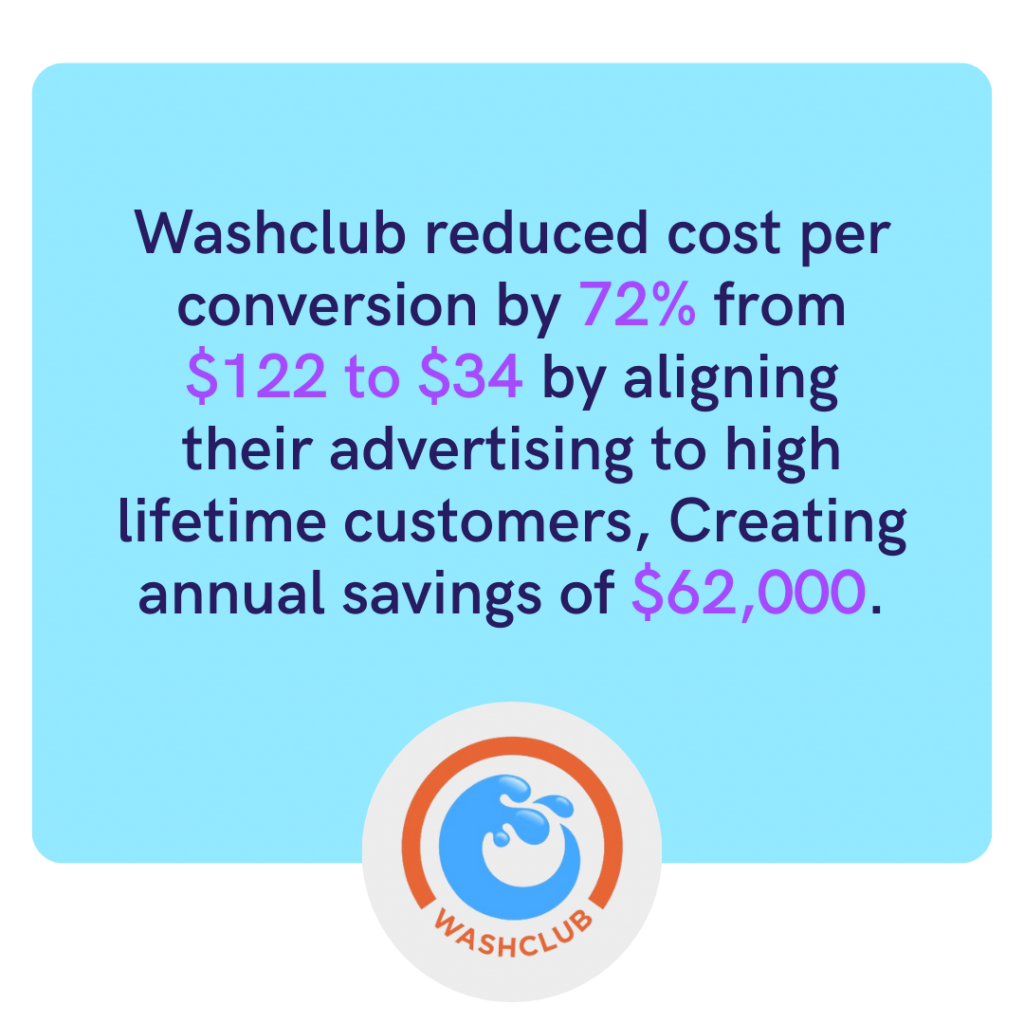

Matching Cohorts to Acquisition Decisions
Cohort analysis becomes powerful when directly tied to acquisition strategy.
Evaluating channels by lifetime value rather than cost-per-acquisition often reveals that short-term efficiency misleads. Campaigns, keywords, creatives, and landing pages within the same channel can produce vastly different cohort outcomes.
Testing creative and pricing through cohort LTV, rather than immediate conversions, uncovers whether expectation-setting improves retention. Sometimes lower upfront volume produces significantly stronger long-term value.
This requires robust attribution infrastructure. Acquisition context must be captured at signup and retained throughout the customer lifecycle. Without that connection, optimisation remains superficial.
Advanced businesses layer predictive modelling on top, using early engagement signals to estimate likely cohort value within weeks rather than waiting months for full retention curves to emerge.
When used properly, cohort analysis becomes a continuous optimisation engine, shifting acquisition strategy from chasing volume to engineering value.




















Cohort Models That Optimise Spending
The real power of cohort analysis lies in shaping future decisions, not analysing past ones. Cohort insights should directly guide acquisition budgets, targeting, creative, and pricing, which requires a clean link between acquisition inputs and the customer lifetime outcomes they generate.
Evaluating channels by cohort lifetime value rather than short-term CPA often reveals uncomfortable truths. Low-cost channels may deliver weak retention, while higher-cost channels produce customers with dramatically stronger long-term value. Reallocating spend toward higher-quality cohorts may reduce immediate volume but materially improve unit economics.
Cohort analysis also enables granular optimisation. Campaigns, keywords, creatives, and landing pages within the same channel frequently generate very different cohort outcomes. Instead of abandoning channels entirely, budget can be shifted toward the variations that consistently produce higher-value customers.
Executing this properly requires strong attribution infrastructure, capturing acquisition context at signup and retaining it across the customer lifecycle. Regular cohort reviews, supported by early predictive signals, allow faster optimisation without waiting months for full retention curves.
Used consistently, cohort analysis shifts acquisition strategy from chasing short-term efficiency to systematically engineering long-term value.


Conclusion
Lifetime value cannot be reduced to a single blended number without losing the very insight it is meant to provide. Subscription businesses grow sustainably only when they understand which cohorts create value, which destroy it, and why those differences exist.
Cohort analysis transforms LTV from a static reporting metric into a strategic decision-making tool. By linking acquisition inputs to long-term retention, profitability, and payback outcomes, businesses can allocate capital with confidence, optimise campaigns intelligently, and correct deteriorating economics before they compound.
The companies that build this capability stop guessing about customer quality. They measure it, compare it, and invest accordingly, turning cohort insight into long-term competitive advantage.
Get In Touch
Our friendly team are always on hand to answer questions, troubleshoot problems and point you in the right direction.
