
8 Tips To Avoid
Business Intelligence Debt
At 173tech, we are passionate about unlocking the true value of data. However, one of the biggest challenges in achieving this is that BI infrastructure often has an indirect impact on business users, making it difficult to justify investment in improvements.
To maximise efficiency, businesses must minimise BI (business intelligence) debt by first building a solid data foundation. Poor choices can quickly shift this balance, especially when growing rapidly, amplifying the negative consequences. To help you navigate this challenge, we’ve compiled 7 essential tips for scaling analytics efficiently while keeping BI debt to a minimum.
1. Establish a Focused Data Strategy
It might seem like common sense, but clearly defining the objectives for any analytics initiative is a step that is surprisingly easy to overlook. Analytics is not about producing more numbers or prettier dashboards, it is about enhancing understanding of your business and uncovering actionable opportunities for optimisation. The most effective analytics efforts are those that help you make better decisions, faster.
However, not all insights are created equal. The true value of analytics lies in its ability to uncover opportunities with meaningful business impact. An insight that promises a 10x ROI in theory may sound impressive, but if it applies only to a tiny subset of your customers, it may not justify the time, resources, and complexity required to act on it. This is why prioritisation is critical: focus on opportunities that move the needle at scale.
Before diving into an analytics project, start by pinpointing the core business challenges you need to solve. Are you struggling to attract new customers (acquisition), keep existing ones engaged (retention), increase the value they bring over time (monetisation), or perhaps streamline operations? Each of these challenges demands a different analytical lens and a different set of metrics.
Once you have defined these priorities, align your data collection and tracking strategy to them. Collecting “everything” from the outset might feel safe, but it can quickly lead to data bloat, slowing down analysis, increasing costs, and making it harder to distinguish the signal from the noise. Instead, gather the data you know you will need to address your defined challenges, and then expand your scope gradually as new questions emerge.
By starting with a sharp focus on business-critical objectives and building your analytics around them, you create a streamlined, high-impact process that delivers insights worth acting on.
2. Implement A Data Warehouse
For many companies, the analytics journey begins with the built-in reporting offered by platforms like Shopify or Google Analytics. At first, these tools seem sufficient, but gaps in understanding soon appear. To fill those gaps, businesses often add more specialised tools: one for product analytics, another for customer insights, another for sales data, and so on.
Over time, this patchwork creates a fragmented ecosystem where multiple tools overlap, each offering a slightly different version of the truth. Instead of delivering clarity, the result is a distorted view of the customer journey. Costs can also escalate quickly. Many analytics tools are priced to attract smaller users, but the expense scales sharply as your usage grows. Take Lifetimely, for example; a popular tool for calculating customer lifetime value in eCommerce. At 3,000 monthly orders, it costs $149. By 7,000 orders, that price jumps to $299, exceeding the cost of running an entire modern data stack.
The solution is to create a single source of truth: a centralised location to store, integrate, and model all of your data. This is where a data warehouse comes in; platforms like Redshift, Snowflake, BigQuery, or Databricks are optimised for processing large-scale calculations efficiently.
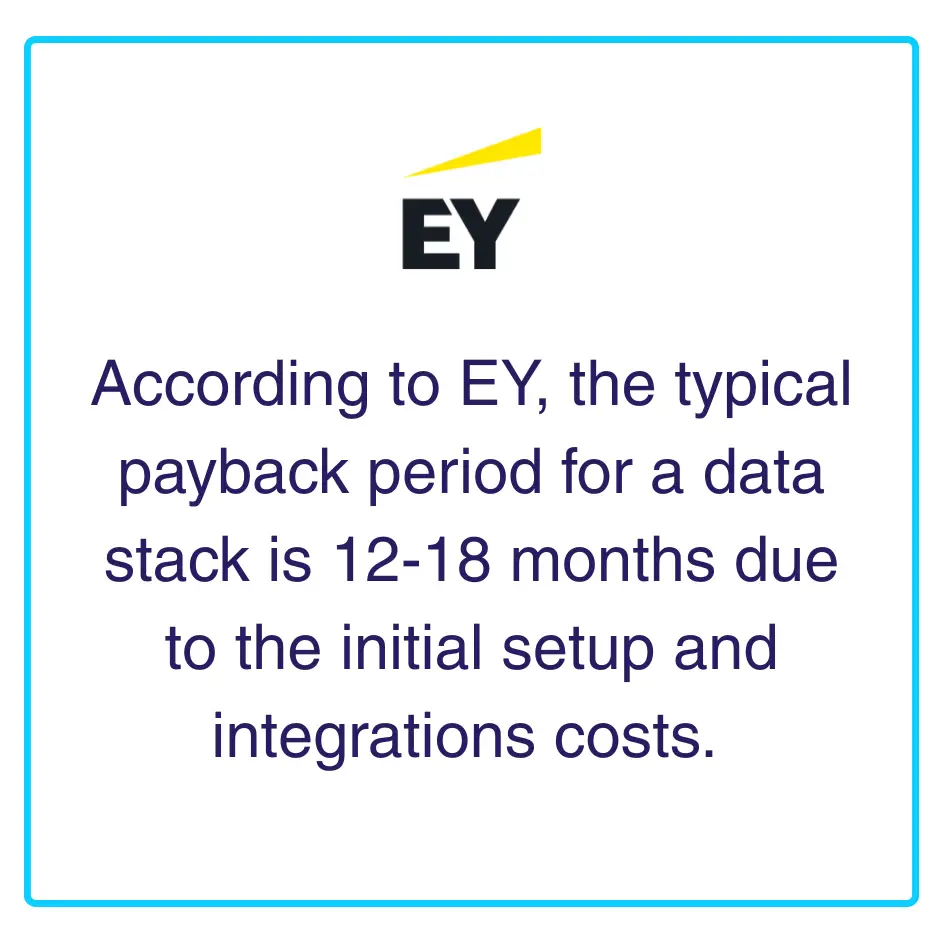
Although setting up a dedicated analytics environment might feel like an extra cost in the early stages, it will almost certainly save money as your company grows. A unified data warehouse doesn’t just streamline your analytics; it sets the foundation for more accurate insights, better decision-making, and sustainable scaling.

3. Think Long-Term
Many data tools lure you in with a friendly promise: “Try now. No cost until you reach this threshold. Don’t worry about it—that’s years away.” It feels like a win. You get instant functionality, no procurement hurdles, and the freedom to start experimenting without financial commitment.
Until, suddenly, you hit that threshold. And the free ride is over. What was once a no-brainer choice now becomes a recurring expense that grows with your usage, sometimes exponentially. You might think, “Well, when that happens, I’ll just switch to something cheaper or better.”
Only, in practice, switching is not so simple. By that point, the tool has become deeply woven into your workflows. It powers reports that executives rely on, automates key business processes, and integrates with multiple systems across departments. Replacing it means not only finding an alternative but also migrating data, rebuilding integrations, retraining staff, and managing downtime, all of which take weeks or even months. And there is no guarantee the replacement will match the old tool’s capabilities or reliability.
The decisions you make early in your data journey will determine whether your stack grows with you, or ends up holding you hostage. We have found this to be particurly true when people choose ‘free’ versions of tools where they need to self-host. Often the engineering time needed to maintain pipelines has a significant;y higher cost than the fee they would pay for the managed version.
4. Automate As Much As Possible
Ad-hoc data pulls can be a major drain on time and resources. Every time an analyst manually extracts, cleans, and processes data to answer one-off business questions, it diverts focus from more strategic work.
Instead of constantly responding to unique requests, businesses should aim to automate as many recurring questions as possible. Building reusable data models and dashboards ensures that frequently asked questions can be answered instantly without requiring fresh data pulls. By reducing the need for manual intervention, analytics teams can focus on higher-value insights, and business users gain faster access to the information they need.
In the long run, relying heavily on ad-hoc SQL queries creates hidden technical debt. When every analyst writes their own queries in isolation, logic becomes inconsistent, metrics like “active users” or “repeat purchase rate” might be defined differently across teams. This inconsistency erodes trust in the data and forces constant reconciliation work. Over time, the lack of standardised, centralised models also makes onboarding new analysts harder, as they must decipher scattered, undocumented queries. Worse, when analysts leave, valuable institutional knowledge disappears with them. A well-governed data modelling layer prevents these issues by ensuring that everyone in the business is working from the same, tested, and version-controlled definitions.
5. Data Modelling To Gold Standard
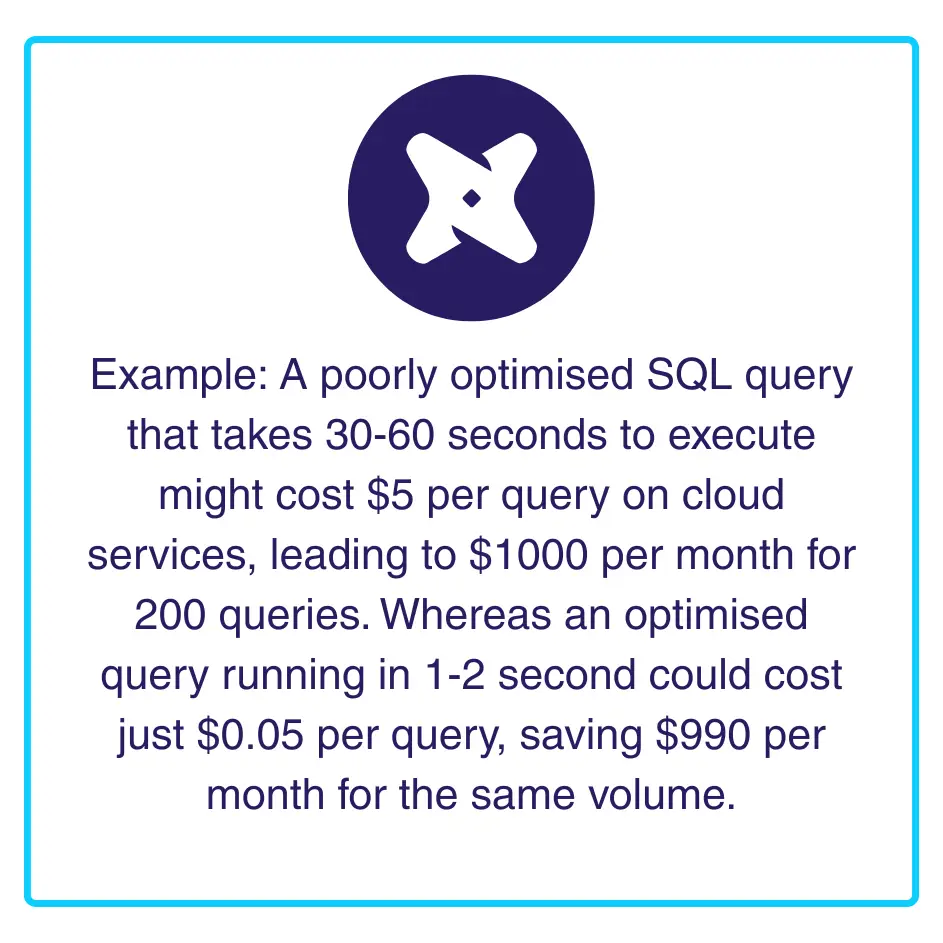
Data modelling is a direct cost-saving measure, not just a technical best practice. By structuring data efficiently within your warehouse and automating transformations, it eliminates redundant processing and reduces query run times, both of which can significantly inflate cloud computing costs when left unchecked. In modern warehouses where billing is tied to compute usage, even a few extra seconds per query, multiplied across hundreds or thousands of daily runs, can quietly add up to thousands of dollars per year.
Without robust modelling, analysts often resort to rewriting similar queries with slight variations, introducing inconsistencies in metrics definitions and creating unnecessary duplication. This not only wastes analyst time but also increases the likelihood of misaligned reports, leading to decisions made on inaccurate or incomparable data. A poorly modelled environment can also become a storage nightmare: duplicate tables, uncompressed exports, and fragmented datasets accumulate over time, driving up storage costs and making governance more complex.
Well-structured data models address these issues head-on. They create a single source of truth, where business logic and key calculations are centralised, tested, and version-controlled. This improves SQL efficiency, standardises definitions across teams, and reduces the need for manual fixes. In turn, compute cycles are spent only where they add value, storage is kept lean, and troubleshooting costs are minimised. Over time, these operational efficiencies translate into tangible financial savings, freeing up budget for innovation rather than firefighting.

Expert help is only a call away. We are always happy to give advice, offer an impartial opinion and put you on the right track. Book a call with a member of our friendly team today.
6. Be Wary Of Overfitting Models
Overfitting occurs when a model becomes so finely tuned to the patterns, quirks, and even noise in its training dataset that it struggles to perform well on new, unseen data. In other words, it “memorises” the training data rather than truly learning the underlying relationships. For example, a straightforward model for predicting weight based on height might use a simple linear regression (e.g. Weight = β₀ + β₁ × Height), capturing the general trend without overcomplicating the relationships. An overfitted alternative might introduce dozens of additional variables (like shoe size, favourite colour, or postcode) plus unnecessary polynomial terms and interaction effects. While this complexity may produce near-perfect accuracy on the training set, it will likely fail to predict weight accurately for new individuals, because it is modelling patterns that are specific to the training data, not to reality.
This over-complexity creates significant operational headaches. Models that are overfitted tend to require constant retraining and fine-tuning to remain accurate as new data arrives, because they are brittle and sensitive to even small shifts in data distribution. This means more cycles of experimentation, reprocessing, and validation, draining both analyst time and computational resources. For large-scale deployments, that translates directly into higher cloud compute bills, longer project timelines, and more frequent interruptions to production systems.
By contrast, simpler, well-regularised models are less prone to overfitting and are better at generalising to different datasets, environments, and time periods. They are faster to train, cheaper to run, and easier to interpret, making it quicker to iterate and troubleshoot when issues arise. Beyond cost savings, these models are also more stable, reducing the frequency of model drift, lowering the risk of performance degradation, and providing decision-makers with more consistent and trustworthy outputs. In short, resisting the temptation to overfit is not just a technical best practice; it is a strategic choice that leads to leaner, faster, and more resilient machine learning operations.
7. Peer Review Your Work
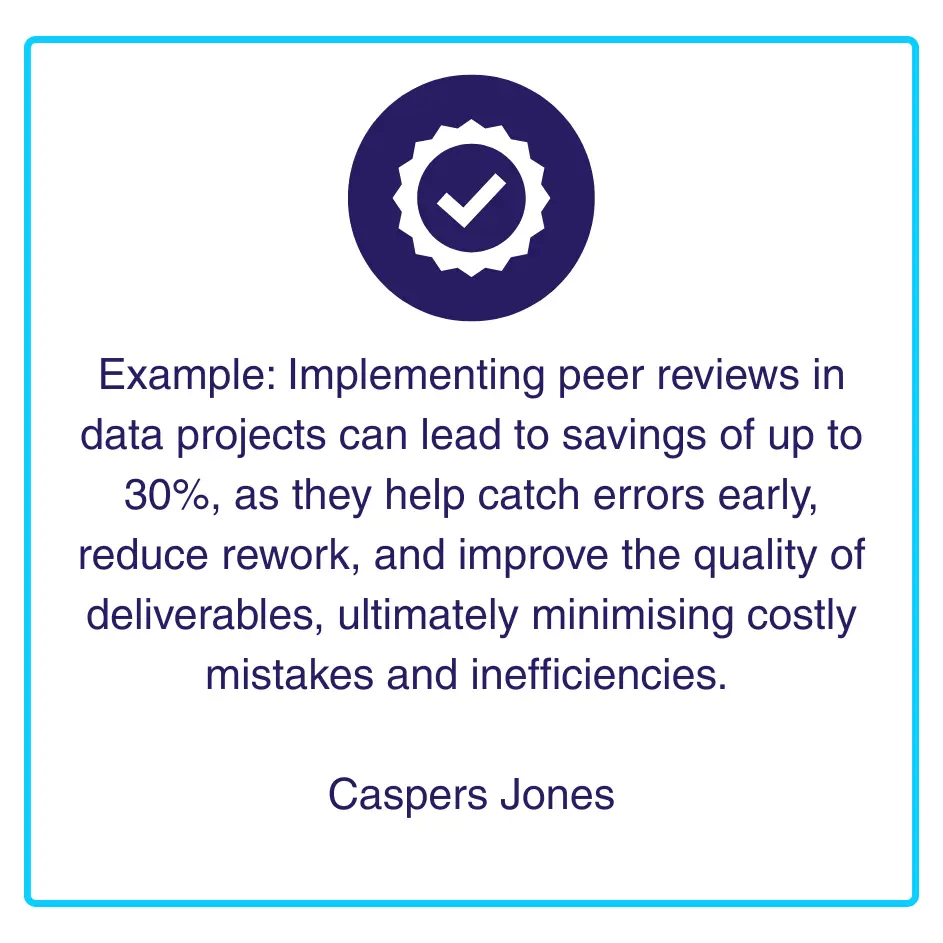
Peer reviews play a crucial role in cost reduction by improving the quality of output and reducing the likelihood of errors, which can be costly to fix later. When a second pair of eyes reviews a report or analysis, it helps identify potential issues early on, saving both time and money that might otherwise be spent correcting mistakes. Alongside this you should adopt version control, which allows teams to track changes, preventing costly mistakes and rework by providing the ability to quickly revert to previous stable versions if errors occur.
Additionally, by ensuring the accuracy and credibility of the work, peer reviews enhance the trustworthiness of the analytics team within the organisation. It is important that alongside peer reviews of the code, that all analytics outputs (models, charts etc) are verified against their source of truth, but also with a stakeholders to ensure that the numbers look right. This can lead to more efficient collaboration and decision-making, reducing delays and the costs associated with poor-quality work or rework. Ultimately, peer reviews help streamline workflows, prevent costly errors, and contribute to a more cost-effective operation.

8. Get The Right Help
Using an agency like 173tech can help reduce costs by providing specialised expertise and resources without the need to hire full-time staff. Agencies can quickly scale up or down based on project needs, allowing companies to avoid the overhead of maintaining a large in-house team. They bring efficiency by leveraging proven tools and methodologies, reducing the learning curve and time spent on experimentation. Additionally, agencies often work on multiple projects across various industries, enabling them to offer cost-effective solutions and insights gained from diverse experiences, ultimately helping businesses avoid costly mistakes and optimise their analytics efforts.
