
4 Mistakes Founders Make
When Implementing Data
(and how to avoid them)
Mistakes. We would all like to avoid them, but perhaps the biggest skill in being a founder is learning your lessons well and adapting. But what if you did not have to?
For other half a decade we have been advising founders just like you on how to get the most out of data. So why not learn a few valuable lessons from the mistakes of others?
1: Slow Reactions Lead to Sluggish Growth
Decision-making delays often begin innocently. In the early days, pulling data from a spreadsheet or asking a team member for a manual report feels manageable. However, as the business grows, so does the number of data sources, the complexity of queries, and the urgency of decisions.
Instead of instant access to insight, leadership finds itself waiting hours, sometimes days, for information. This lag means teams are reacting to last week’s reality rather than today’s challenges. Opportunities are missed not because they were invisible, but because the business could not respond in time.
This “rear-view mirror” decision-making has a compounding effect. Slow reactions to product usage trends delay feature launches. Hesitation on marketing performance data means scaling spend after the optimal period has passed. And delayed financial insights lead to cost overruns that could have been mitigated.

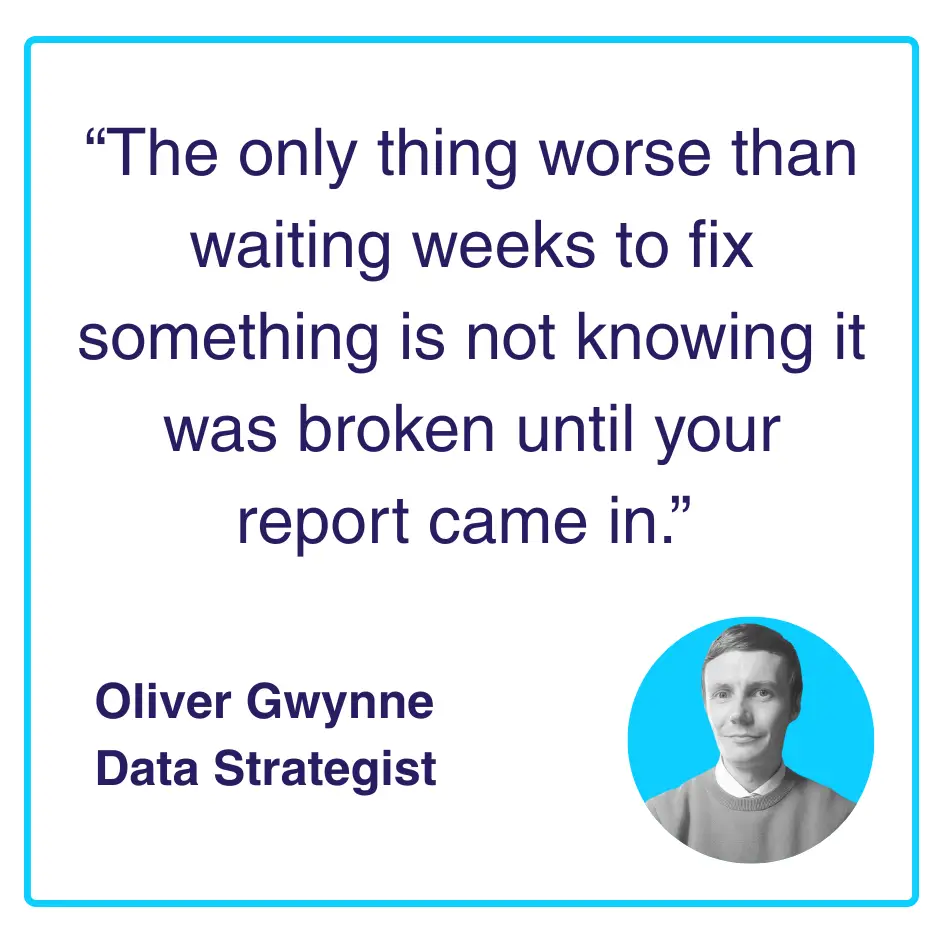
Data is about much more than reporting, but that is often where it starts. Manual reports can take hours or even days to compile because data sits in so many different systems. A data pipeline replicates the same process that your team are doing right now. It extracts data from those various sources, stores them in a centralised location and then crunches the numbers to produce insights. The main difference? It does all of this automatically.
Founders often undervalue this shift because they see reporting as a necessary chore rather than a strategic lever. When insights arrive only once a month, the lag creates a “decision gap” the time between an event occurring and the organisation being able to act on it. That gap compounds over time, turning small missed optimisations into lost growth opportunities. Automating the data flow collapses that gap, delivering enhanced visibility and enabling teams to spot trends, correct course, and capture opportunities while they still matter.
2: Hunting for Unicorns
The “data unicorn” is the mythical individual who can do it all, design robust data architecture, build and maintain ETL pipelines, model datasets for analysis, run advanced statistical or machine learning models, translate results into actionable commercial strategy, engage stakeholders effectively, and produce polished dashboards on demand. In theory, this one person could replace an entire data team; in practice, it’s a fantasy that persists in many early-stage companies.
While such individuals do exist, they are exceptionally rare and command salaries well beyond the reach of most start-up budgets.
Even when a unicorn is hired, the breadth of the role means constant context switching, which erodes focus and productivity. They often get the stack up and running, but often when data volumes start to scale, what they have built has not been optimised for this and so the cost increases significantly and the stack often has to be completely redesigned.

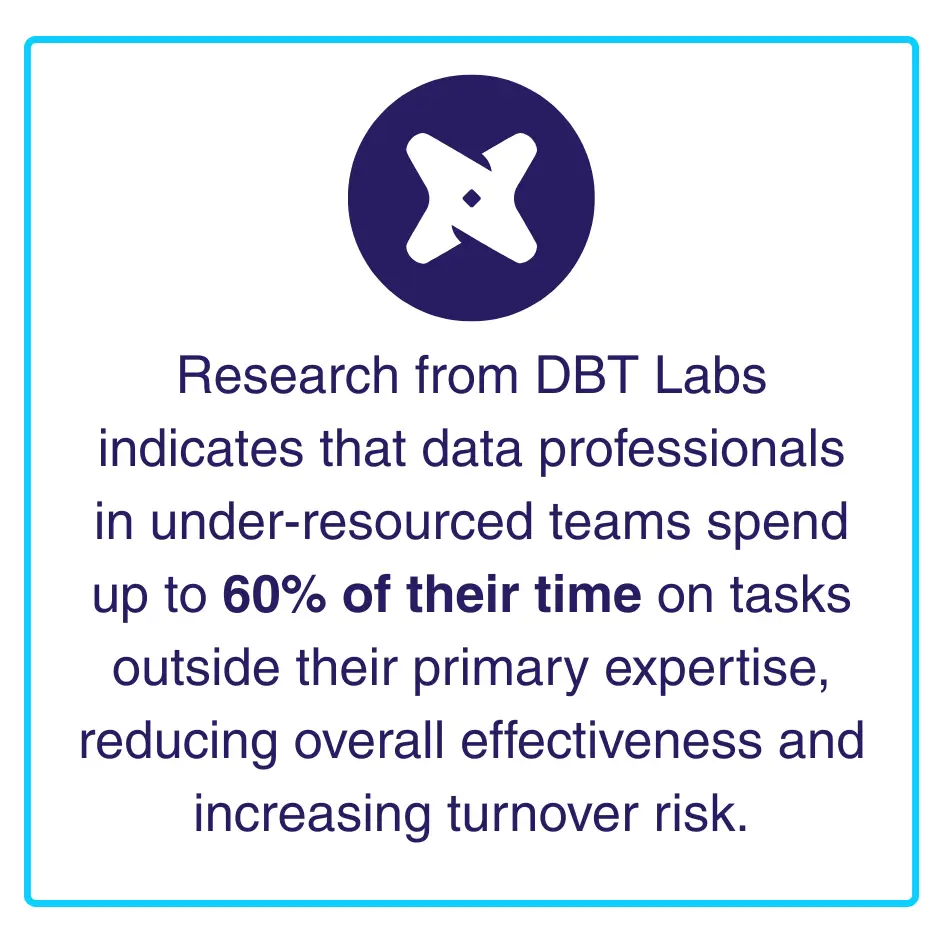
A sustainable data strategy requires recognising that data engineering, analytics, and strategic insight are distinct specialisms and building processes and teams that respect those boundaries. That means you need:
Data Engineers, the people who build and maintains pipelines and infrastructure.
Data Analysts, the people who translates raw data into insights for decision-makers.
Domain Experts, the people who ensure insight/analysis is aligned with business needs.
All of this can add cost and time-to-value but is exactly why we consider turning to a data agency as a viable alternative. We provide a multi-disciplined team to every project meaning you can get started with data quickly and without headcount. Moreover you will not need to start from scratch a few years down the line.
Expert help is only a call away. We are always happy to give advice, offer an impartial opinion and put you on the right track. Book a call with a member of our friendly team today.
3: Not Optimising For Tomorrow
In the early days of a start-up, founders are under immense pressure to keep the business moving forward while conserving cash. It is natural to focus on solving the most immediate problems, and the quickest or cheapest tool often feels like the smart choice. When the team is small and the product is still finding market fit, these decisions can seem perfectly reasonable, after all, you just need something that works right now.
The challenge is that early technical and operational decisions cast a long shadow. Especially in data. The tools and systems chosen in the first year often form the foundation on which everything else is built. If that foundation is fragile, it can create significant operational and financial burdens later. We regularly see start-ups adopt tools that perform well for a few thousand rows of data but slow to a crawl (or fail outright) once the business is dealing with millions. At that point, replacing them is not just a matter of buying something better; it is a costly, time-consuming migration that risks disrupting day-to-day operations.

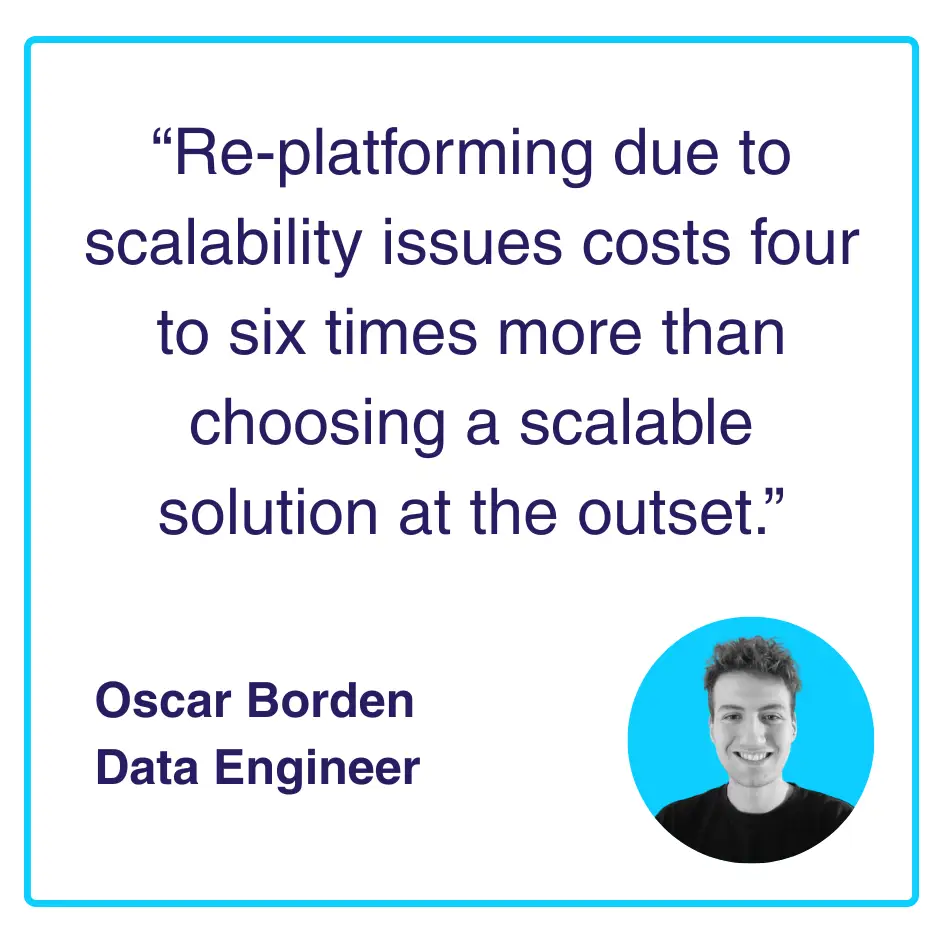
Infrastructure choices can create similar traps. Self-hosting a database or analytics platform can look appealing when subscription fees feel expensive, but those savings are often an illusion. The true costs emerge over time in the form of maintenance work, security patching, compliance requirements, and the constant challenge of scaling as usage grows. What seemed like a quick win in year one can, by year three, be consuming precious engineering time and creating hidden risks for the business.
The lesson is clear: speed and cost matter in the early days, but so does thinking ahead. Choosing tools and infrastructure that can grow with you (even if they take slightly longer to set up or cost a bit more upfront) is often the cheaper and faster path in the long run. By balancing short-term pragmatism with long-term scalability, founders can avoid the painful rebuilds that so often slow a start-up’s growth just as it begins to take off.
4: Plugging Every Knowledge Gap But Still Not Having an Answer
A common trap for ambitious founders is the belief that simply integrating more data sources will unlock deeper, more valuable insights. It is an appealing idea, the notion that by connecting CRM, finance systems, product analytics, marketing platforms, customer support tools, and perhaps even third-party market data feeds, the business will somehow “see everything” and therefore know exactly what to do next. On paper, this looks like a smart, thorough approach. In reality, it can create a significant delay in delivering anything useful to the business.
Every new data source must be connected, cleaned, and modelled before it can be reliably used. That modelling requires not just technical work, but business context: aligning definitions, mapping relationships, and agreeing on how metrics should be calculated. The more sources you bring in at once, the longer it takes before any of them are in a state to support decision-making. In many cases, leadership finds themselves waiting months for a “complete” dataset, precious time in which competitors are already learning and adapting.
The real cost here is time-to-value. Integrations that look like “just another API” on a roadmap can quickly turn into weeks of engineering and analytics effort. By the time the full picture is available, the market conditions, customer behaviour, or strategic priorities may already have shifted, rendering some of the work outdated before it even lands.
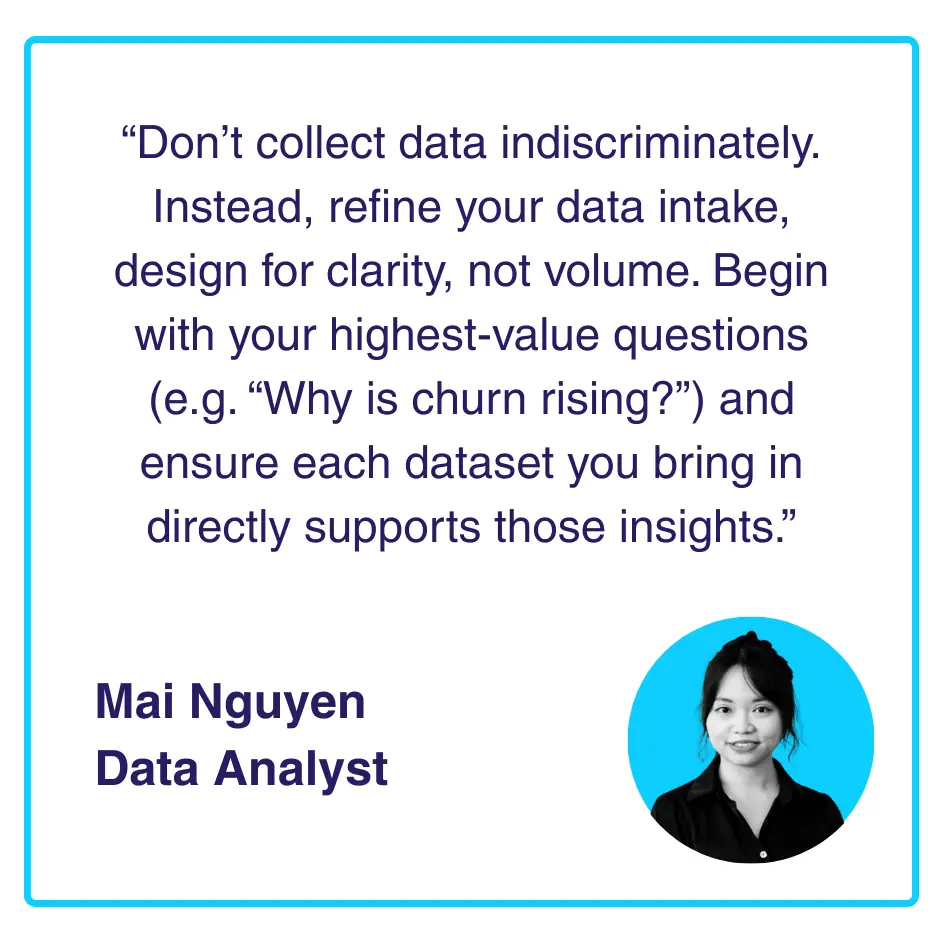
The learning is simple but powerful: focus. Start with the one or two business questions that, if answered today, would have the biggest impact on your trajectory. Integrate and model only the data sources needed to answer those questions. Deliver value quickly, build trust in the data, and expand from there. This way, every new integration is a stepping stone to faster learning, not a barrier to it.

Conclusion
Implementing data well is not simply a technical challenge, it is a strategic one. The founders who build truly effective data capabilities resist the urge to “do everything at once” and instead prioritise delivering value quickly, sustainably, and with a clear link to business outcomes. They invest early in automation to reduce manual bottlenecks, choose tools with the future in mind, focus their integrations on the questions that matter most, and structure their teams realistically rather than chasing mythical all-in-one hires.
At 173tech, we have seen that the most successful data strategies start small, deliver tangible wins quickly, and expand with purpose. When your data function becomes a catalyst for confident, rapid decisions, it does more than support your business, it accelerates it. The question for every founder is not just “What data do we have?” but “How quickly can it help us act?”
